 EN

What Inflatable Dock Floats Actually Do on a Floating Deck
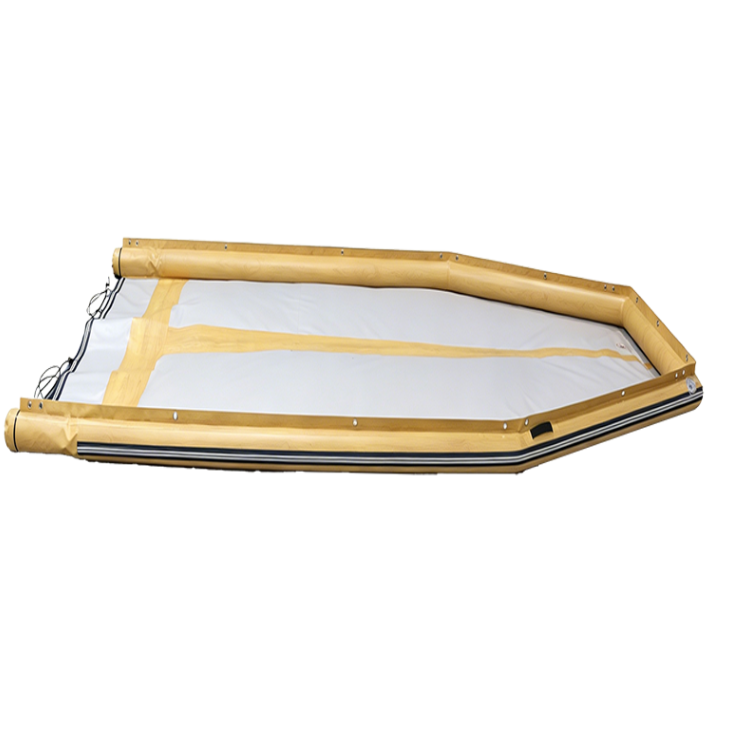
A floating deck lives or dies by its flotation. Wood framing, composite decking, railings, furniture, and people all add up fast, and the buoyancy system underneath has to carry that load through wind, waves, tide, and the slow creep of seasonal water level changes. Inflatable dock floats have moved well beyond the lake cottage crowd. Waterfront bars, marina walkways, rental operators, and commercial deck builders now use them as a legitimate alternative to rotomolded polyethylene or foam-filled pontoons. The core idea is simple: sealed air chambers wrapped in heavy-duty PVC or TPU fabric displace water and generate buoyancy, and the whole assembly can be deflated, rolled up, and shipped or stored without a forklift. That portability alone changes the economics of seasonal docks, remote installs, and rental fleets that need to reconfigure layouts between events.
The Buoyancy Math That Determines Whether a Deck Floats Level
Buoyancy is not guesswork. A cubic foot of submerged volume displaces roughly 62 pounds of fresh water, and salt water gives slightly more. A float rated at 20 cubic feet of displacement theoretically supports around 1,240 pounds, but that is the gross figure. Design load has to account for the float's own weight, framing, decking, fasteners, furnishings, and a safety margin for wave action and uneven weight distribution. Most commercial floating deck projects target a load factor of 2:1 or better, meaning the total flotation capacity is at least twice the estimated dead and live load. That margin matters because a deck that sits too low ships water over the edge in a chop, and a deck that rides too high becomes tender and uncomfortable. Air chamber count also matters. A float with four or six independent chambers tolerates a puncture far better than a single bladder, because losing one chamber does not sink the platform. Pressure matters too. Most inflatable dock floats run at low pressure, typically 1 to 3 psi, and overinflation is a more common failure mode than underinflation. A soft float flexes with the load and sheds wave energy; a rock-hard one concentrates stress at the seams.
Comparing Inflatable Floats Against Rigid and Foam-Filled Options
The table below reflects typical field experience across freshwater and saltwater installations, not lab conditions.
| Attribute | Inflatable PVC/TPU Floats | Rotomolded Polyethylene | EPS Foam-Filled Pontoons |
|---|---|---|---|
| Dry weight per 20 cu ft unit | 25 to 40 lb | 90 to 130 lb | 110 to 160 lb |
| Shipping and storage | Deflated, rolls into a bag | Rigid, palletized | Rigid, bulky |
| Puncture response | Chamber isolation, gradual loss | Can flood, loses buoyancy fast | Crushes, absorbs water |
| Repairability | Field patch kit, valve replacement | Limited, often replacement | Poor, waterlogged foam is permanent |
| Typical seasonal install time | 1 to 2 hours for a small deck | 3 to 5 hours with equipment | 4 to 6 hours with equipment |
| Shore impact when deflated | Minimal, rolls up | Needs staging area | Needs staging area |
| Best fit | Seasonal, rental, remote, reconfigurable | Permanent residential | Permanent, high-load |
The trade-off is real. Rigid polyethylene floats win on abrasion resistance against rocky bottoms and require less attention over a decade of permanent service. Inflatable units win on logistics, reconfigurability, and shock absorption in open water. Foam-filled pontoons are heavy and dependable until they are not, and once waterlogged they are landfill.
Installation Details That Separate a Stable Deck From a Wobbly One
Frame attachment is where most inflatable floating deck problems start. Straps and webbing need to wrap around the float body, not just the valve or seam, and the frame should distribute load across the float's top surface rather than point-loading it at a few brackets. A common field mistake is overtightening straps until the float dimples, which creates stress risers and shortens service life. Mooring is the second weak point. A floating deck tied off with a single line will yaw and slap in wind; a four-point mooring with enough slack for tide and wave rise keeps the platform stable without shock-loading the floats. Wind load on railings and furniture is easy to underestimate. A deck with a solid windbreak panel catches far more force than an open railing, and the mooring system has to be sized for that. Finally, leave room for the floats to breathe. Packing them tight against each other or against a seawall traps debris and chafes the fabric.
A Waterfront Rental Operator's Reconfiguration Problem, Solved With Air
A rental operator on a large Southern reservoir ran a seasonal floating deck for paddleboard launches and evening events. The deck had to move twice a year, once for a summer festival layout and once for a quieter shoulder-season configuration, and the site had no boat ramp wide enough for a trailer-mounted rigid dock. The original foam-filled pontoons required a barge and a crane each time, which ate most of the event margin. The switch to inflatable dock floats let a two-person crew deflate the units, roll them into a pickup bed, and reassemble the deck at the new location in under three hours. The operator also added two spare chambers after the first season, because a stray anchor line had chafed one chamber during a storm. That is the honest lesson: inflatables are not puncture-proof, and a repair kit plus a spare chamber is not optional equipment for commercial use. The American Boat and Yacht Council's guidance on flotation and load distribution, along with ASTM F2624 for inflatable buoyancy products, gives a useful framework for sizing and labeling, though field conditions always demand a margin beyond the minimum.
Where Inflatable Dock Floats Make Sense and Where They Do Not
These floats shine in seasonal installations, rental fleets, remote sites without equipment access, and any deck that needs to change shape or location. They also work well as supplementary flotation under an existing rigid dock that sits too low. They are a poor choice for permanent installations in high-abrasion environments with jagged rock bottoms, heavy ice loading, or constant debris impact, where a rigid float's toughness wins. They also demand a discipline that some owners skip: pressure checks before each season, a visual inspection of seams and valves, and proper mooring that does not shock-load the fabric. Treated as a disposable inflatable toy, they fail. Treated as a engineered flotation component with a maintenance schedule, they deliver years of service. Higher Sports builds commercial-grade inflatable flotation and water leisure products from its Laixi production base, with batch-consistent quality control and a North American warehouse that supports replenishment for waterfront operators who cannot afford to wait on a season.
Table of Contents
- What Inflatable Dock Floats Actually Do on a Floating Deck
- The Buoyancy Math That Determines Whether a Deck Floats Level
- Comparing Inflatable Floats Against Rigid and Foam-Filled Options
- Installation Details That Separate a Stable Deck From a Wobbly One
- A Waterfront Rental Operator's Reconfiguration Problem, Solved With Air
- Where Inflatable Dock Floats Make Sense and Where They Do Not