 EN

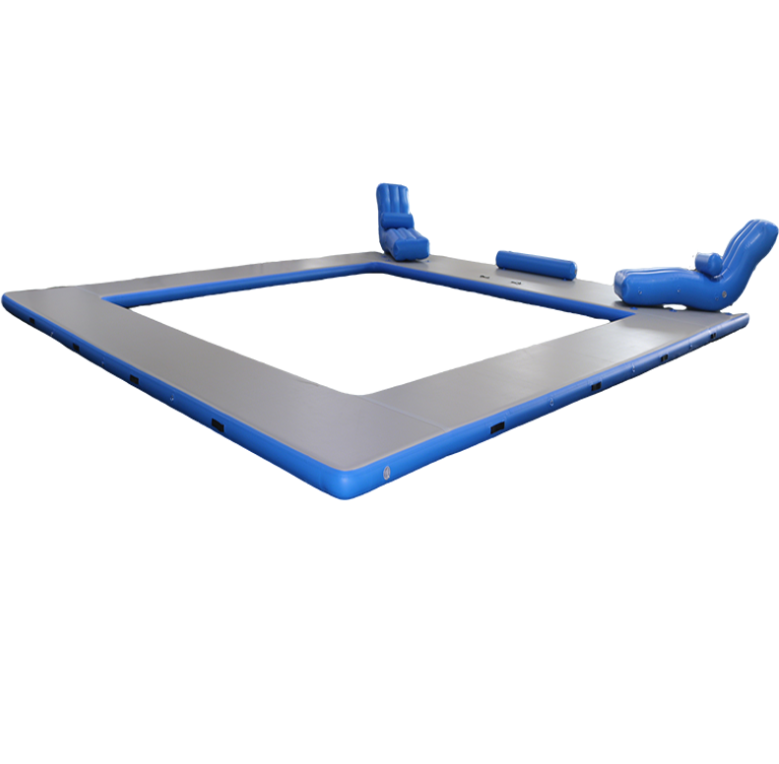
Match the floating pool to the water, not the other way around
A floating pool in the ocean is not a backyard liner dropped into saltwater. It is a small marine structure that has to handle tide, chop, wind, and salt. The first decision is whether the site is sheltered enough for a floating pool at all. A bay with a sandy bottom, weak tidal range, and a breakwater behaves very differently from an open beach with two foot chop and a four knot current. Before pricing anchors or decking, collect at least two weeks of site data: tidal range, current speed at slack and peak, prevailing wind, wave fetch, water depth, and seabed type. If the site has breaking waves or a fetch longer than a few miles, a floating pool may need a breakwater or a different location. EN 15649, the European standard for floating leisure articles, offers useful design language for stability and buoyancy, yet it does not replace local marine engineering. A pool that looks calm at noon can become a battering ram by evening.
Map tides, currents, and wind exposure before any anchor goes in
Tidal current is often the load that surprises people. A floating pool has huge windage and drag. Even a mild current pushes against the hull, the netting, the ladder, and anyone inside. NOAA current tables and local harbor data can show peak flood and ebb, but the real number comes from a current meter left in place through a full lunar cycle. Wind exposure matters just as much. A pool placed downwind of a tall resort block may be calm in the morning and nasty when afternoon gusts funnel between buildings. Wave fetch is the distance wind travels over open water. A one mile fetch with 15 mph wind can create enough chop to slap under a float and fatigue a connection. The practical move is to sketch a load rose: direction, speed, duration. Anchor points should be arranged so no single line takes the full shock. Redundancy is not optional. Two independent anchor groups, each sized for the design load, give a margin if one line chafes or a connector works loose.
Build the anchoring system around seabed and load
Anchor choice starts with what is under the bottom. Sand, mud, rock, seagrass, and coral each demand a different approach, and environmental rules may rule out some options before engineering begins. A screw anchor can work well in sand or firm silt, but it needs a diver or ROV to verify torque and depth. Concrete blocks are simple and removable, yet they need massive weight and can scour the bottom. Piles hold hard in soft sediment, but pile driving is noisy, expensive, and often restricted. The table below gives a field comparison. Holding values are rough planning figures for a small floating pool, not final design loads.
| Anchor type | Best seabed | Holding style | Installation footprint | Notes |
|---|---|---|---|---|
| Helical screw anchor | Sand, firm silt | Mechanical friction | Small | Diver or ROV verification needed |
| Concrete deadweight | Rock, hard bottom | Gravity | Large | Scour and placement tolerance |
| Driven pile | Soft sediment | Bearing and friction | Medium | Noise and permit limits |
| Suction anchor | Soft clay, silt | Pressure differential | Medium | Sensitive to installation method |
For a small pool, a four point mooring with elastic elements can reduce shock. For a larger deck, eight or more points may be needed. Chain is strong but heavy and has no give. Nylon stretches and absorbs energy, though it degrades under UV. A mixed system, chain at the anchor and nylon at the float, often balances abrasion resistance with shock absorption.
Assemble on land, then tow or crane into position
Ocean assembly is slow, risky, and expensive. If the pool can be inflated, framed, and tested on a dock or ramp, do it there. A crew can check seams, valves, ladders, and attachment points in daylight with tools nearby. Once the unit is floating, a small workboat can tow it to the mooring field at slack tide. Crane placement works better in a marina or sheltered bay. During a 2022 resort retrofit in the Florida Keys, an installation team found that a planned beach launch would cross a seagrass flat. The team switched to a barge launch outside the flat, used helical anchors in sand pockets, and ran synthetic lines above the grass. The schedule slipped by two days, but the project avoided a permit violation and a damaged habitat. A plan that only works on paper is not a marine plan.
Permits, compliance, and the paperwork that keeps a project legal
In U.S. waters, a floating structure may trigger U.S. Army Corps of Engineers review under Section 10 of the Rivers and Harbors Act, plus Section 404 if fill or excavation is involved. State environmental agencies may add water quality, submerged lands, and protected species reviews. Local harbor masters often control mooring location and navigational safety. Start permit talks early. A lease or authorization can take months. Product compliance is a separate file. For floating leisure articles sold into Europe, EN 15649 is the common reference. Inflatable amusement devices may fall under ASTM F2374 in the U.S. market. ISO 9001:2015 quality management and SGS verification help buyers file supplier documents, but they do not replace site permits. Keep certificate numbers, test reports, and material declarations organized by project.
Commissioning, daily checks, and the limits of ocean floating pools
After installation, load test the mooring at low and high tide. Watch line angles, connector wear, and hull trim. A floating pool should sit level, with no hard points pulling under water. Daily checks should cover anchor lines, valves, handholds, and debris. After a storm, inspect before use. Ocean floating pools are not right for every site. Exposed coastlines, heavy shipping lanes, and areas with large tidal swings can make them impractical. A sheltered bay with a sand bottom and modest current is the sweet spot. The honest answer to a difficult site is often no, or a different design. That is better than a failed mooring. Higher Sports, a manufacturer with production in Qingdao and a California warehouse, supports such projects with batch-consistent inflatable production, CE and ASTM documentation, and North American replenishment.
Table of Contents
- Match the floating pool to the water, not the other way around
- Map tides, currents, and wind exposure before any anchor goes in
- Build the anchoring system around seabed and load
- Assemble on land, then tow or crane into position
- Permits, compliance, and the paperwork that keeps a project legal
- Commissioning, daily checks, and the limits of ocean floating pools