 EN

Define the Actual Use Case Before Drawing Anything
A dock for boats is not a single product with one correct shape. The design starts with how the dock gets used, not with how it looks from the shoreline. A fishing skiff needs a different edge height than a pontoon boat. A kayak launch has different boarding requirements than a jet ski lift. If those details are unclear, the first drawing is already wrong.
Start by listing the vessels that will use the dock. Note their beam, freeboard, and how people typically board. A boat with a high bow rail needs a step or a lower platform section. A low-profile fishing boat may do fine with a simple side tie. The dock must match the boat, not the other way around.
Water level fluctuation is the next hard constraint. A lake with a two-meter seasonal swing demands a different structural approach than a tidal creek with a one-meter daily range. The design has to stay usable at low water and safe at high water.
Choosing Between Fixed, Floating, and Hybrid Structures
Fixed docks work where water depth is shallow and bottom conditions allow solid piling. They stay put, handle heavy loads, and need little daily adjustment. The downside is that they cannot follow big water level swings. If the water drops too far, the deck ends up too high for safe boarding.
Floating docks solve that problem by rising and falling with the surface. They are common on reservoirs, rivers with barge traffic, and lakes with soft bottoms. Their weakness is movement. Wind, wakes, and shifting loads make them sway unless lateral restraint is built in from the start.
A hybrid setup often makes the most sense. A fixed ramp from shore connects to a floating platform anchored with guide piles. That gives access across the water level range while keeping the boarding area reasonably steady. The tradeoff is more components, more hardware, and more points to inspect.
Layout Rules That Prevent Bottlenecks and Collisions
Dock layout is easy to underestimate. A single straight walkway looks simple on paper, but two boats trying to tie up at the same time can create a traffic jam. Allow enough clearance between slips for people to walk with gear and for boats to swing slightly without hitting each other.
A common rule of thumb in recreational marina design is at least 1.2 to 1.5 meters of clear walkway width on the main dock. Finger piers should leave enough room for the widest expected boat plus fender space. When in doubt, add width. Narrow docks feel unsafe and get damaged more often.
Also think about prevailing wind direction. Boats drift downwind when approaching. If the dock is positioned so that the wind pushes boats away from the boarding side, every docking maneuver becomes harder. Observing the site on a breezy day before finalizing orientation can save a lot of frustration later.
Flotation, Framing, and Decking Material Selection
Floating dock flotation comes in several forms. Encapsulated foam billets resist waterlogging and punctures. Rotomolded floats are tough and easy to replace. Air-filled sections are lighter and pack down for seasonal storage, but they need pressure monitoring and are more vulnerable to sharp objects.
Frames are typically aluminum, galvanized steel, or treated wood. Aluminum weighs less and resists corrosion well in freshwater. Galvanized steel costs less but eventually shows rust at cut edges and bolt holes. Treated wood is easy to work with but requires more maintenance over time.
Decking choices follow a similar logic. Composite decking stays splinter-free and needs little upkeep. Marine plywood with a non-slip coating is cheaper upfront but fails faster if moisture gets in. The table below compares common material options across key design factors.
| Material Type | Weight | Corrosion Resistance | Maintenance Load | Relative Cost |
|---|---|---|---|---|
| Aluminum frame | Low | Excellent in freshwater | Low | Higher |
| Galvanized steel frame | Medium | Good until coating breaks | Medium | Moderate |
| Composite decking | Medium | Excellent | Low | Moderate |
| Marine plywood deck | Medium | Poor if unsealed | High | Lower |
| Rotomolded float | Medium | Excellent | Low | Moderate |
| Air-filled float | Low | Good if protected | Medium | Lower |
Anchoring and Lateral Restraint Decide Long-Term Performance
The best deck and frame will not survive without a proper anchoring plan. Anchors resist vertical and horizontal loads, but they need to match the bottom. Screw anchors hold well in mud and sand. Concrete blocks work on firm bottoms but may sink in silt. Driven piles provide the strongest lateral control but require installation equipment.
Lateral restraint matters more on floating docks than many designers expect. Without guide piles or tensioned cables, a floating section walks sideways under wind pressure. Over a season, that drift puts stress on gangways and shore connections. A V-shaped cable system or two parallel guide piles can control movement without making the dock feel rigid.
The American Society of Civil Engineers has documented that floating docks in exposed locations often fail at connection points before the deck structure itself shows serious wear. That means the design budget should not all go into premium decking while cheaping out on connectors and anchors.
Designing for Inspection, Repair, and Seasonal Removal
A good dock design includes access for future work. If a float cannot be reached from above or below, replacing it becomes a major job. Leave space between sections for tools and hands. Use hardware that can be removed without cutting. Design the shore connection so the whole assembly can be detached quickly when a storm approaches.
Seasonal removal changes the design in important ways. Lighter sections are easier to pull out, but they move more in rough water. A design that balances weight with handling speed works best for lakes that freeze. Mark each section clearly so reassembly goes back in the same order every year.
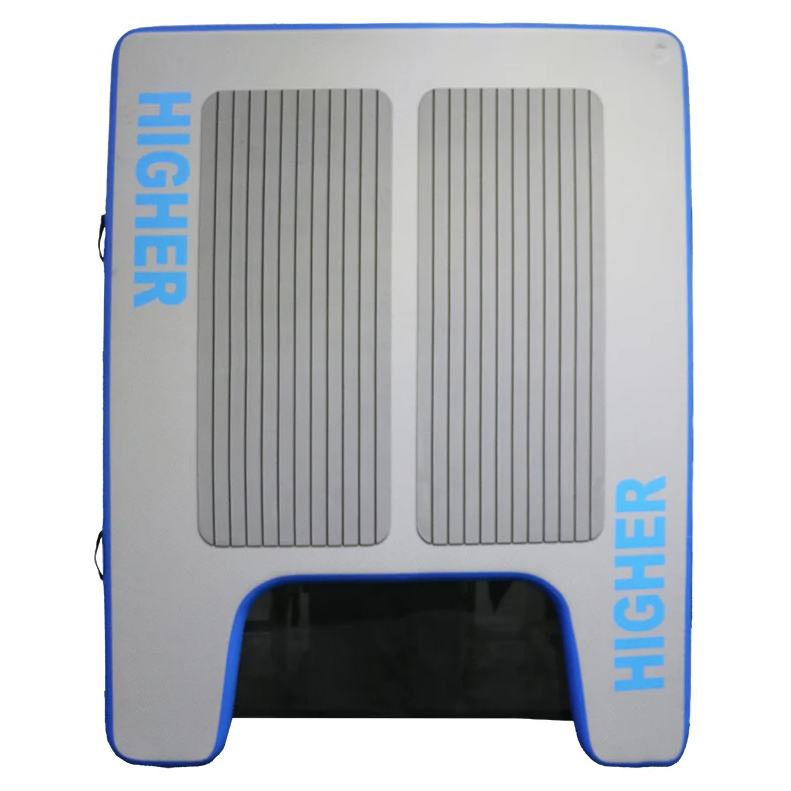
Higher Sports LLC brings manufacturing experience into this design conversation through its inflatable floating platforms and dock sections. The company follows CE, ASTM, and REACH material standards across its production line. For buyers planning a new dock for boats, working with a manufacturer that understands both product structure and real water conditions helps keep the design practical from the first sketch to the final anchor check.
Table of Contents
- Define the Actual Use Case Before Drawing Anything
- Choosing Between Fixed, Floating, and Hybrid Structures
- Layout Rules That Prevent Bottlenecks and Collisions
- Flotation, Framing, and Decking Material Selection
- Anchoring and Lateral Restraint Decide Long-Term Performance
- Designing for Inspection, Repair, and Seasonal Removal