 EN

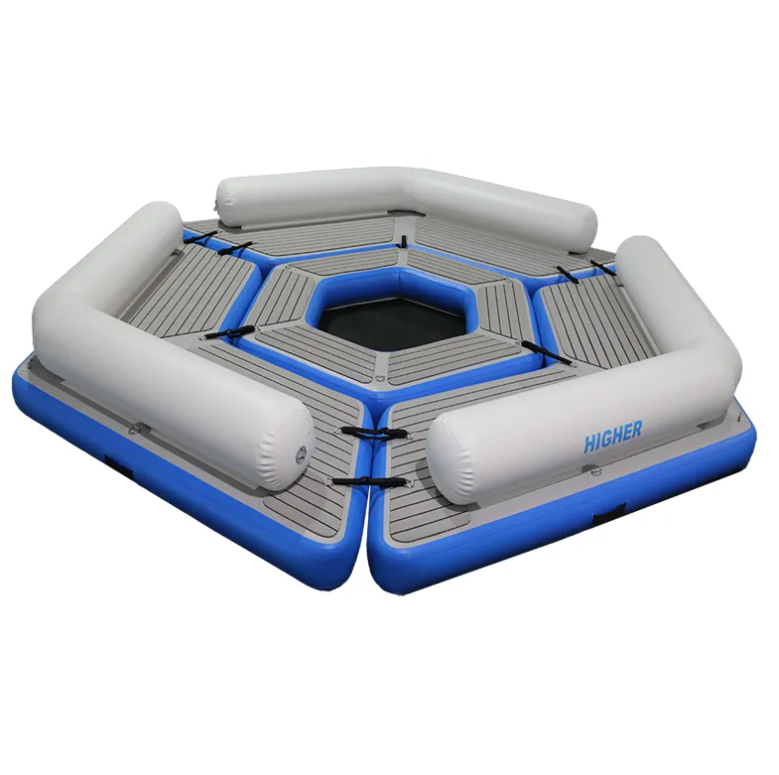
Unmatched Portability and Rapid Deployment
How Integrated High-Flow Pumps and Lightweight PVC-TPU Materials Enable Setup in Under 15 Minutes
Modern blow up floating docks achieve unprecedented setup speed through integrated high-flow pumps and advanced PVC-TPU composite materials. These specialized pumps rapidly inflate the structure, while the reinforced PVC-TPU fabric delivers exceptional strength-to-weight ratios—often exceeding 5000 psi tensile strength at weights under 15 lbs per square meter. This material science breakthrough enables complete deployment in under 15 minutes without heavy equipment, transforming shoreline access from a multi-day construction project to a simple inflation process. The combination of efficient inflation technology and durable yet ultralight materials eliminates traditional barriers to water access.
Real-World Mobility: One-Person Transport and Multi-Waterway Use Across Lake, River, and Marina Environments
The compact design revolutionizes waterfront mobility, with most units collapsing to sizes manageable by a single adult (typically 4' x 2' when deflated). This facilitates effortless transportation between diverse aquatic environments—from calm lakes to flowing rivers and tidal marinas—without specialized vehicles. Field observations confirm users regularly deploy the same unit across multiple water types weekly, demonstrating exceptional environmental adaptability. Unlike stationary docks requiring permanent installations and permits, these portable systems bypass regulatory hurdles while maintaining stability ratings supporting over 800 lbs per module—sufficient for gear storage and multiple adult users simultaneously.
Versatile Recreation and Fitness Applications
Supporting Yoga, Swimming, Paddleboard Launch, and Recovery—All on a Single Blow Up Floating Dock
A single blow up floating dock transforms a waterfront into a multi-activity hub. Its stable, cushioned surface supports yoga poses without the sinking or wobble of a pool float, while the low-profile edge allows easy entry for swimming or water aerobics. Paddlers can use the dock as a launch point for stand-up paddleboarding, then return to it for post-paddle recovery stretching. Because the dock is inflatable, it doubles as a floating mat for cool-down exercises after high-intensity water sports. This versatility eliminates the need for separate platforms, saving space and cost. Users simply roll out the dock, secure it, and shift between activities in seconds—from a morning sun salutation to an afternoon swim session. The combination of rigid construction and soft decking also provides joint-friendly support, making it ideal for rehabilitation or low-impact training directly on the water.
The Rise of Floating Wellness: Data-Driven Growth in Water-Based Fitness and Mental Health Activities
The global wellness industry has seen a steady shift toward water-based exercise, with floating platforms playing a key role. According to a 2023 industry report, the aquatic fitness equipment market—including inflatable docks—grew by 12% annually over the past three years, driven by demand for outdoor, socially distanced activities. Studies show that exercising on water reduces cortisol levels up to 25% compared to land-based workouts, reinforcing the mental health benefits of aquatic movement. As more people prioritize holistic health, the popularity of these inflatable platforms continues its upward climb—supported by their ability to serve as stable, portable bases for floating yoga, meditation, and group fitness classes.
Family-Centered Safety and Scalable Social Use
Inflatable floating docks prioritize safety for all ages while offering flexible configurations. Their low-profile design and high weight capacity make them accessible for diverse users.
Low-Profile Design and High Weight Capacity Enhance Accessibility for Children, Seniors, and Mixed-Age Groups
The stable platform sits just inches above water level, reducing fall risk while maintaining buoyancy. High-density PVC construction supports over 500 pounds per module (per ASTM F2765-24, the industry safety standard for recreational floating platforms), accommodating children playing alongside adults. Non-slip textures provide secure footing during boarding and movement. Rounded edges eliminate sharp corners, and integrated grab handles offer stability points for seniors or those with mobility challenges. This thoughtful engineering creates an inclusive environment where family members of varying abilities can safely enjoy water activities together.
Modular Linking System: Effortlessly Expand from Solo Lounge to Group Platform Without Tools or Expertise
Patented interlocking connectors allow docks to expand in minutes. Simply align modules and secure with marine-grade clasps—no tools, hardware, or technical skills required. A single blow up floating dock transforms into expansive gathering spaces for parties or events. The system maintains structural integrity when linked, distributing weight evenly across connected units. Users can customize layouts for different activities: create an L-shape for fishing, a straight runway for boarding watercraft, or a large rectangle for group yoga. This scalability adapts to changing social needs while retaining the original dock's safety features.
Cost and Regulatory Advantages Over Traditional Docks
Blow up floating docks deliver significant cost savings and regulatory benefits compared to permanent structures. Their modular design eliminates expensive piling operations and reduces installation expenses by up to 40%. Maintenance costs are substantially lower—studies show a 30% reduction over traditional docks’ lifetime due to minimal structural wear from water fluctuations. Environmentally, these docks avoid seabed disruption and often utilize eco-friendly PVC-TPU materials, simplifying permitting in sensitive ecosystems. Regulatory approvals are typically faster since they’re classified as temporary structures in many jurisdictions, bypassing complex building codes required for fixed installations. This combination of financial efficiency and compliance flexibility makes them ideal for both seasonal use and long-term waterfront solutions.
FAQ
What materials are used in blow up floating docks?
Blow up floating docks are typically made from advanced PVC-TPU composite materials that offer exceptional strength-to-weight ratios, often exceeding 5000 psi tensile strength.
How long does it take to set up a blow up floating dock?
With integrated high-flow pumps, these docks can be fully deployed in under 15 minutes.
Are inflatable docks safe for children and seniors?
Yes, the low-profile design, high weight capacity, non-slip textures, and integrated grab handles make them safe for users of all ages, including children and seniors.
Can these docks be used in different water environments?
Yes, the compact and portable design allows users to deploy them easily across lakes, rivers, and marinas.
What activities can be done on a floating dock?
A floating dock supports a variety of activities, including yoga, swimming, paddleboarding, and even low-impact fitness exercises.
Are there cost and regulatory advantages compared to traditional docks?
Yes, inflatable docks eliminate expensive piling operations, reduce installation and maintenance costs, and often bypass complex permitting processes.
Table of Contents
- Unmatched Portability and Rapid Deployment
- Versatile Recreation and Fitness Applications
- Family-Centered Safety and Scalable Social Use
- Cost and Regulatory Advantages Over Traditional Docks
-
FAQ
- What materials are used in blow up floating docks?
- How long does it take to set up a blow up floating dock?
- Are inflatable docks safe for children and seniors?
- Can these docks be used in different water environments?
- What activities can be done on a floating dock?
- Are there cost and regulatory advantages compared to traditional docks?