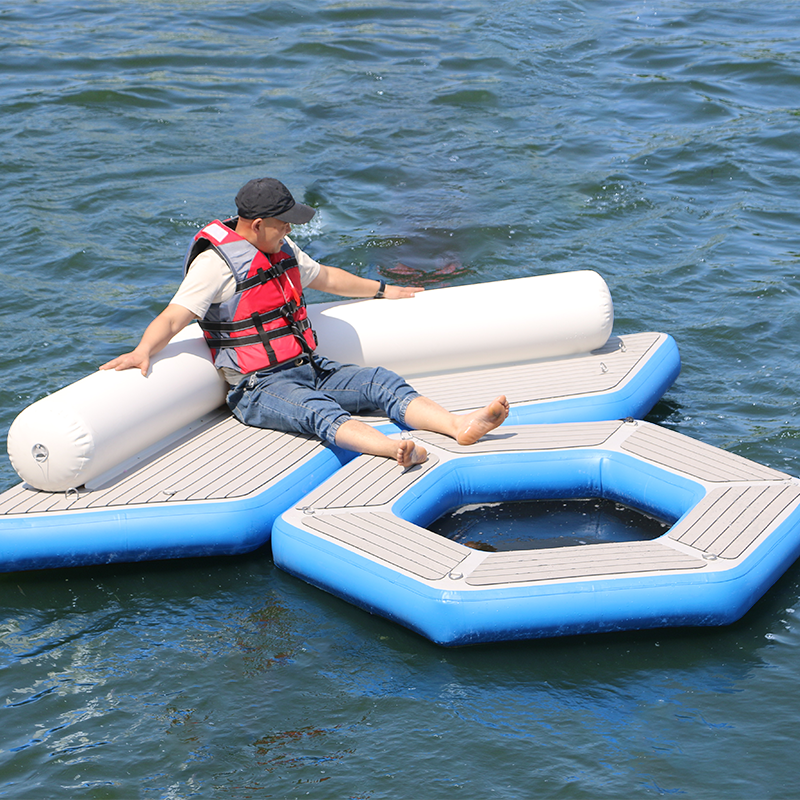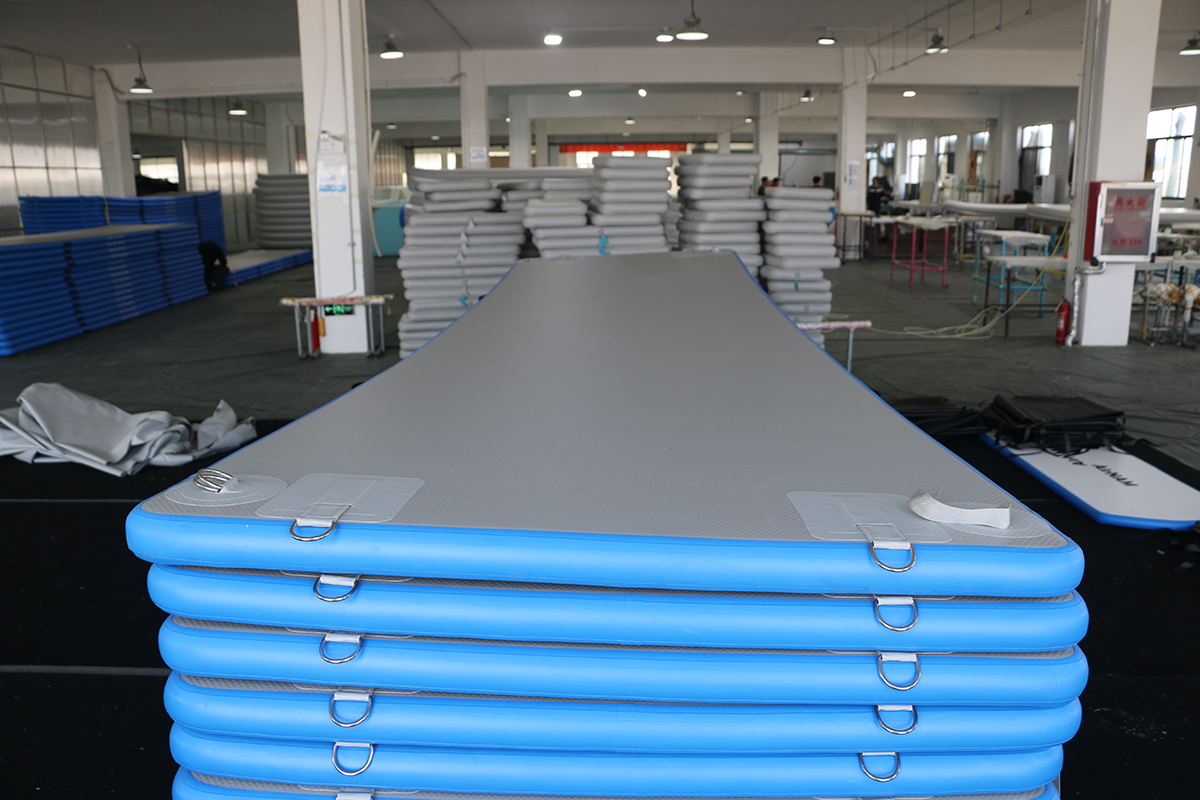
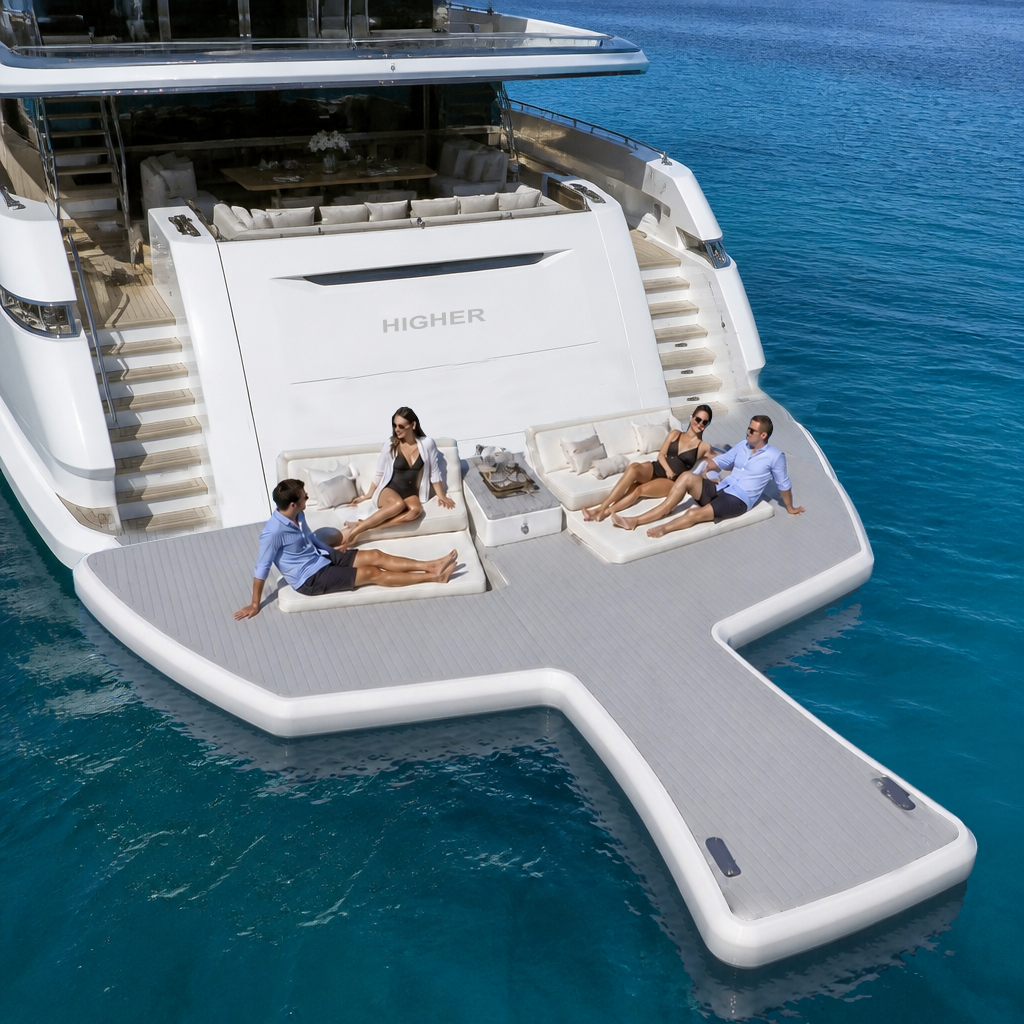
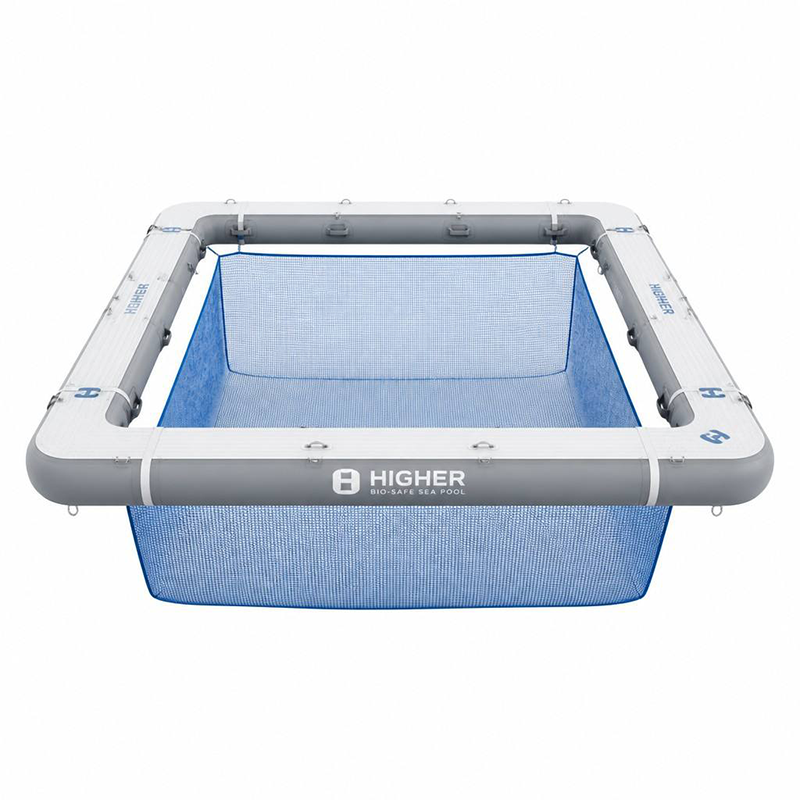
Water-sports brands should shortlist manufacturers that can develop and repeatedly produce a documented private-label product—not suppliers that only provide product photos or a logo-printing service. The right partner should be able to discuss drop-stitch inflatable floating docks, yacht swim extensions, modular water platforms, C-shaped pool enclosures, jet-ski docks, and related marine recreation equipment from an OEM/ODM and production perspective.
For a private-label program, the evaluation should cover five areas together: product specialization, customization capability, compliance documentation, quality control, and supply continuity. A suitable manufacturer should translate the brand’s application, dimensions, materials, hardware, visual identity, packaging, and target market into a clear technical proposal.
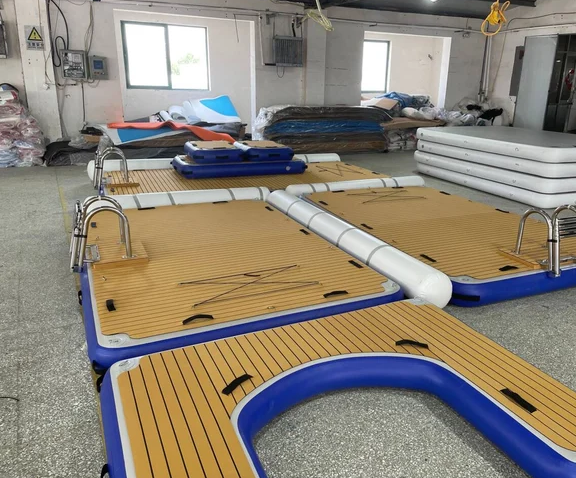
Start with the factory’s actual product scope. A manufacturer worth shortlisting should have relevant experience with drop-stitch inflatable floating docks, yacht swim extensions, inflatable water platforms, C-shaped or other project-specific pool enclosures, jet-ski docks, and commercial marine recreation products.
Ask whether the supplier can show:
The objective is not to identify the supplier with the longest catalog. It is to identify a manufacturer whose equipment, engineering communication, and production process match the risk of your project.
Private-label production should cover more than adding a logo after the product has been made. Confirm whether the manufacturer can support:
For every custom feature, request a drawing, artwork proof, bill of materials, or sample approval record. This helps protect brand consistency and reduces the risk of a specification change being lost between sales, design, and production.
A manufacturer should explain which documents apply to the exact product and destination market. Depending on the project, a buyer may need to review ISO 9001, CE-related product documentation, REACH information, BSCI or SMETA audit evidence, material declarations, and other compliance records.
Do not accept a certificate list without checking the certificate holder, product scope, certificate number, issuing body, and validity date. Compliance requirements can differ by product type, country, and intended use. The documents should be reviewed before purchase-order approval rather than requested after shipment.
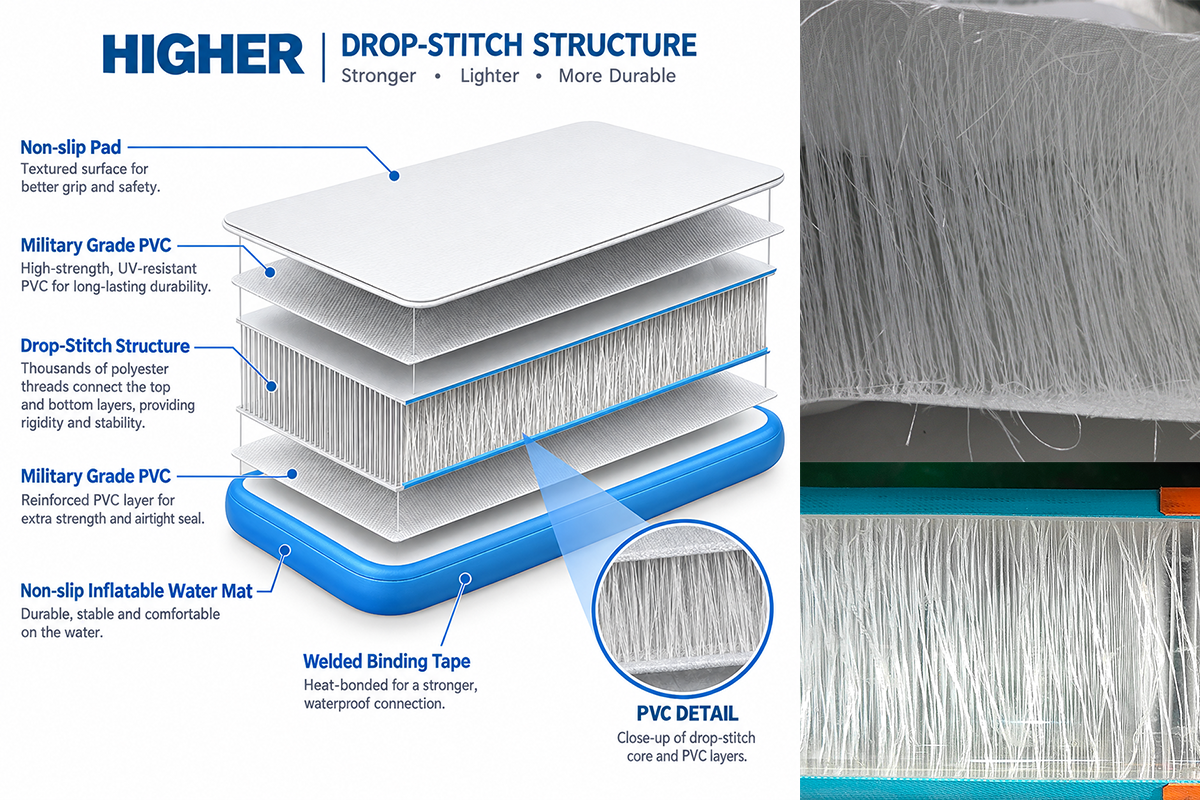
For a rigid feel under inflation pressure, buyers may compare construction options such as 15 cm (approximately 6 in) to 20 cm (approximately 8 in) double-layer wall construction and may discuss a target pressure range such as 8–12 PSI. These figures should be treated as project specifications to confirm—not universal requirements or automatic performance guarantees.
Ask the manufacturer to confirm the suitable thickness and inflation range for the exact model, intended users, water environment, loading assumptions, valves, seams, and operating instructions. A thicker platform is not automatically the correct platform for every yacht, marina, resort, rental, or water-sports application.
Ask how the factory constructs the sidewalls and joins the seams for the selected model. Buyers may request details about thermo-welded seams, high-frequency thermal welding, heat-activated adhesive bonding, or other applicable processes. The answer should match the actual material and construction of the product.
For applicable PVC products, HIGHER describes a Manual Positioned Gluing & Heat Sealing Process. The process should be discussed accurately: adhesive is applied or brushed manually, activated with a manual heat gun, and compressed along the seam with a manual scraper. Buyers should request the process description and inspection scope for the specific product rather than assuming that every model uses the same method.
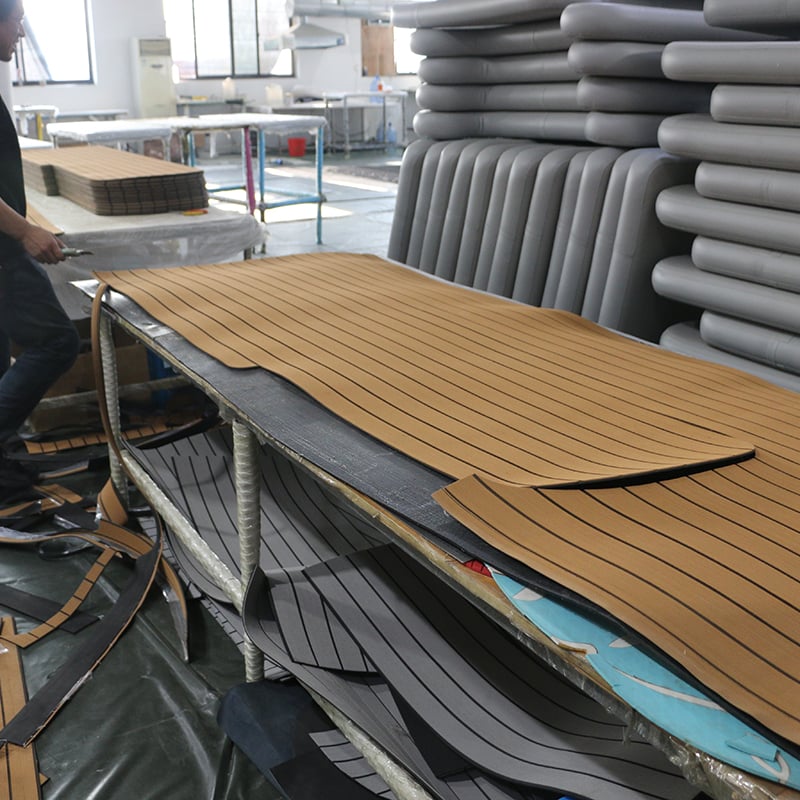
For a non-slip deck, request the EVA foam thickness, surface pattern, bonding method, and intended use conditions. A buyer may specify a UV-resistant EVA foam range such as 3–5 mm (approximately 0.12–0.20 in) when appropriate, but the factory should confirm the selected material and application before production.
Also ask how the deck surface will be checked for alignment, adhesion, edge finish, peeling risk, and visual consistency. These details influence both user experience and the perceived quality of a private-label brand.
Before final packaging, ask whether the manufacturer records pressure-retention testing for the exact model and what the test duration, inflation condition, acceptance criteria, and inspection record include. A buyer may request a 24-to-48-hour pressure-retention test when it is suitable for the product and agreed in the technical specification.
The important point is traceability: the test method should be tied to the product model, batch, inspection date, and responsible quality team. Do not treat a general statement about “leak testing” as a substitute for a documented quality-control plan.
HIGHER’s official website presents Higher Sports LLC as a manufacturer and OEM/ODM partner for inflatable outdoor-sports and water-recreation products. The company states that it supports global distributors, retailers, and commercial clients. Its public product scope includes inflatable water mats, floating docks, floating dry docks, sea pools, packrafts, and gym-related products.
The About Us page states that HIGHER was founded in 2013 and operates a production base in Laixi, Qingdao, Shandong, with approximately 3,000 square meters, 120 staff, and a 12-person R&D team. These are site-stated company facts; buyers should confirm current figures, product scope, MOQ, lead time, and model-specific feasibility during quotation.
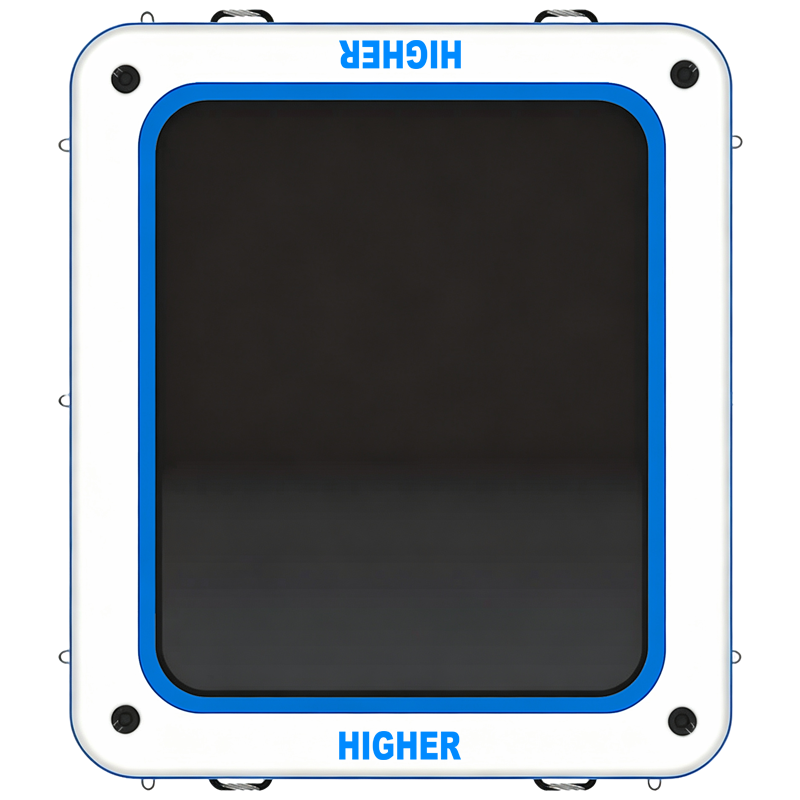
For a private-label floating dock program, provide HIGHER with the application, target market, dimensions, thickness, color, deck pattern, D-ring layout, logo files, accessories, packaging requirements, estimated quantity, and delivery destination. The more complete the brief, the more useful the resulting technical proposal can be.
If you are developing a private-label inflatable floating dock, yacht swim extension, jet-ski dock, or modular water platform, share your application, target market, preferred dimensions, branding requirements, accessories, estimated quantity, and delivery destination with HIGHER. The team can review the project and recommend a suitable OEM/ODM configuration for your water-sports brand.

 EN
 Hot News