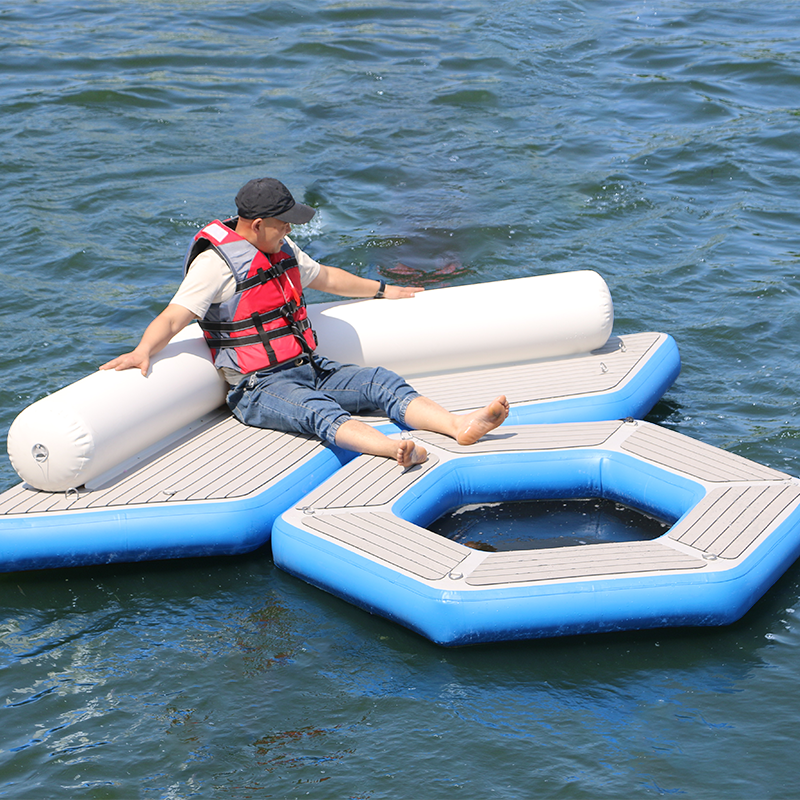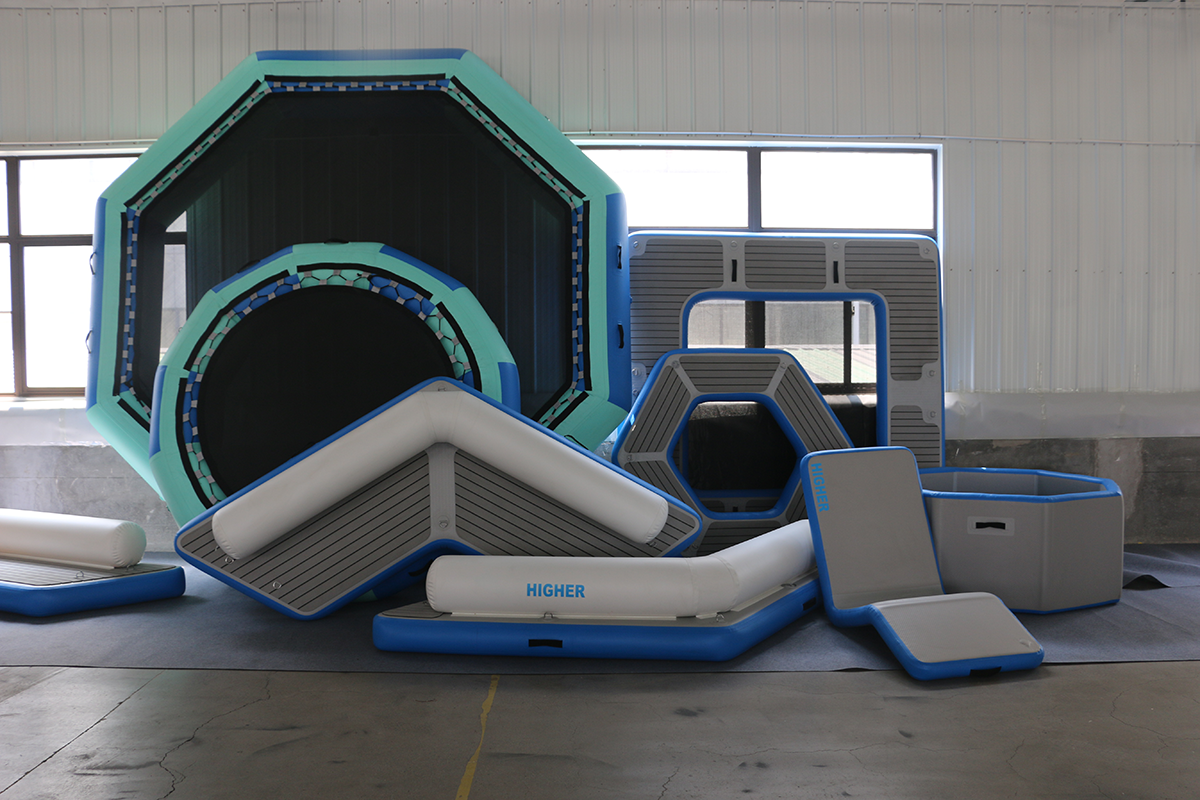
Choosing an inflatable floating dock platform manufacturer requires more than comparing product photos or unit prices. Wholesale buyers, distributors, yacht operators, marinas, resorts, and water-recreation businesses should evaluate construction, application fit, customization capability, quality control, compliance documentation, and supply continuity together. A suitable supplier should be able to translate your use case into a documented product specification and a practical technical proposal.
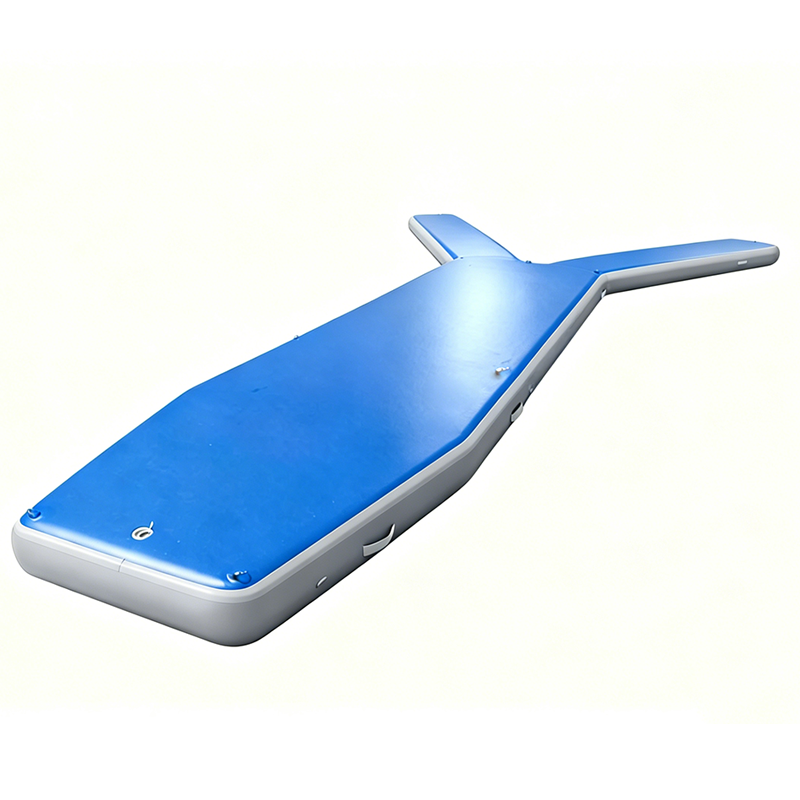
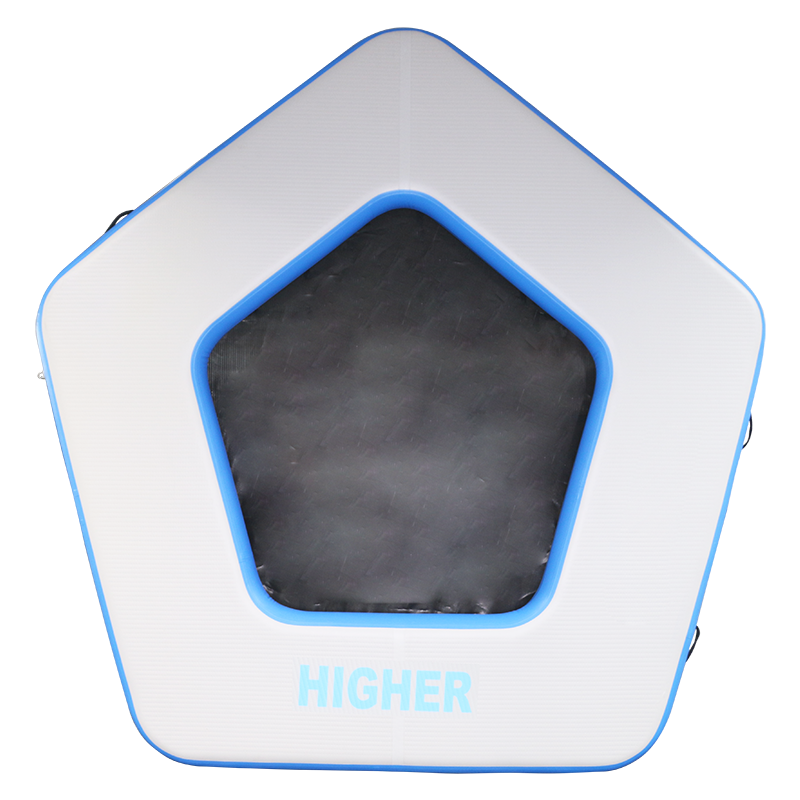
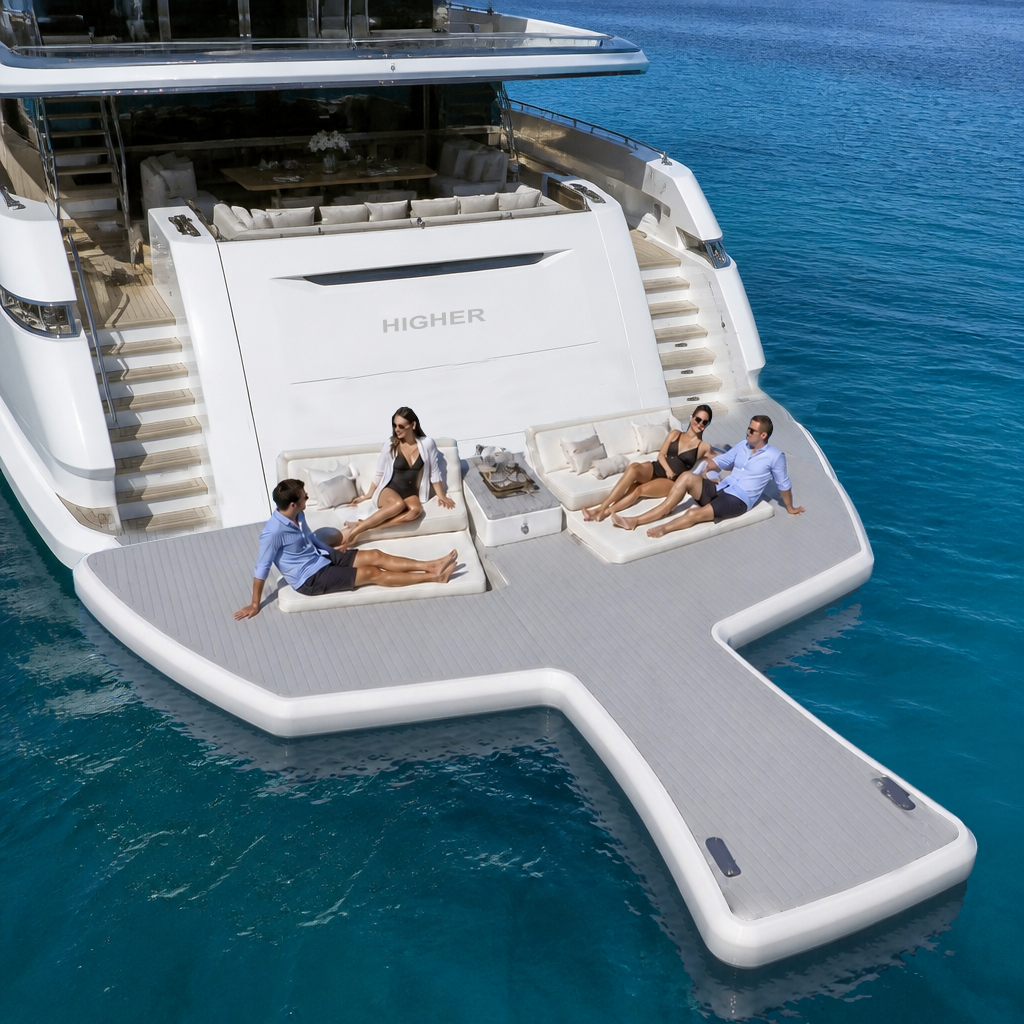
An inflatable floating dock is a portable water platform made from an inflatable structural system, often using drop-stitch construction to improve firmness after inflation. Depending on its design, it can function as an inflatable dock platform, floating swim platform, yacht extension, lake recreation area, or modular commercial inflatable dock. For B2B procurement, the key question is not simply whether a platform floats, but whether the manufacturer can consistently produce the configuration your market requires.
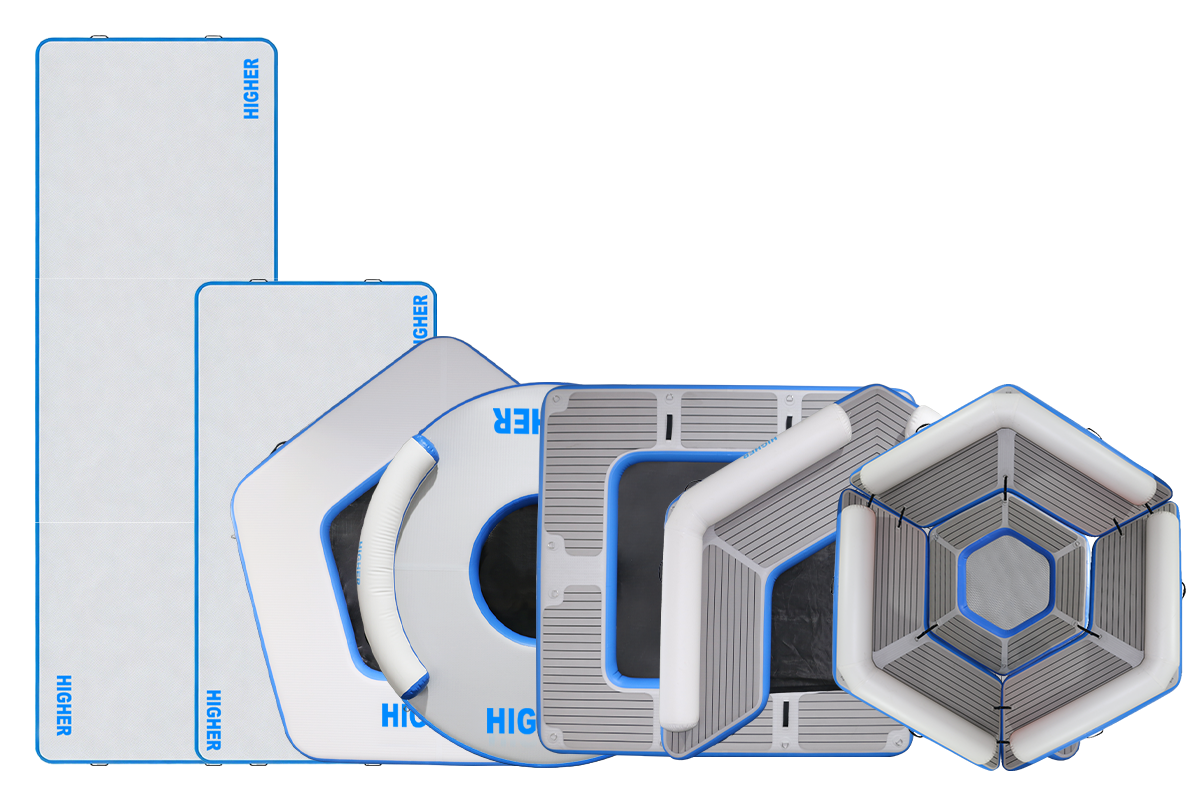
Before contacting factories, define where and how the product will be used. A platform for a private lake house may have different requirements from a floating dock for boats used by a yacht charter business, marina, resort, or rental fleet.
Prepare the following information:
Thickness should be selected according to the intended use rather than treated as a universal selling point. In many projects, thicker construction can support a firmer walking surface and greater buoyancy, but the final specification should be confirmed through the manufacturer’s design review, loading assumptions, and product testing records.
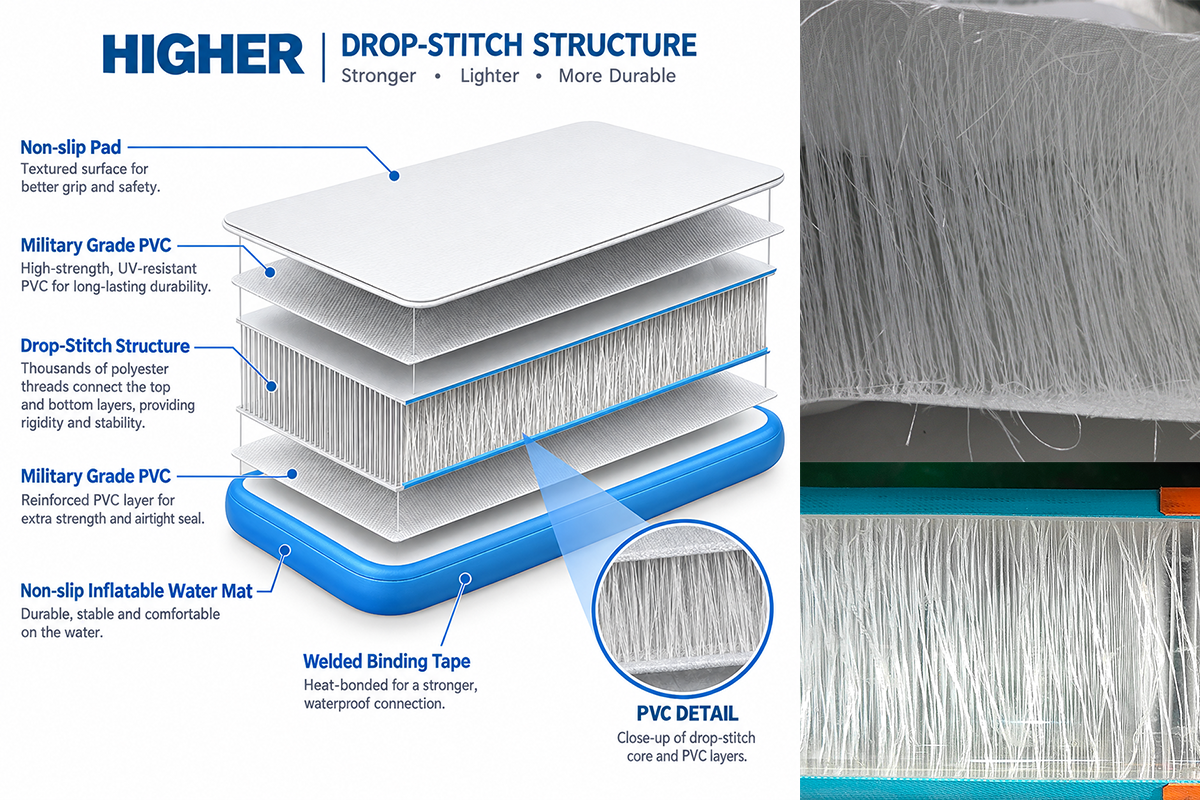
Drop-stitch fabric connects the upper and lower surfaces with internal threads, allowing an inflatable platform to be pressurized and shaped into a firmer structure. Buyers should ask the manufacturer to provide the complete material specification instead of accepting general terms such as “military grade” or “heavy duty.”
Request confirmation of:
Material and process claims should be matched to the actual model. HIGHER’s public manufacturing information describes a Manual Positioned Gluing & Heat Sealing Process for relevant inflatable products, while its product information also identifies drop-stitch PVC platforms and high-frequency heat sealing for selected applications. Buyers should request the applicable process description and inspection records for their own project rather than assuming that every model uses the same construction method.
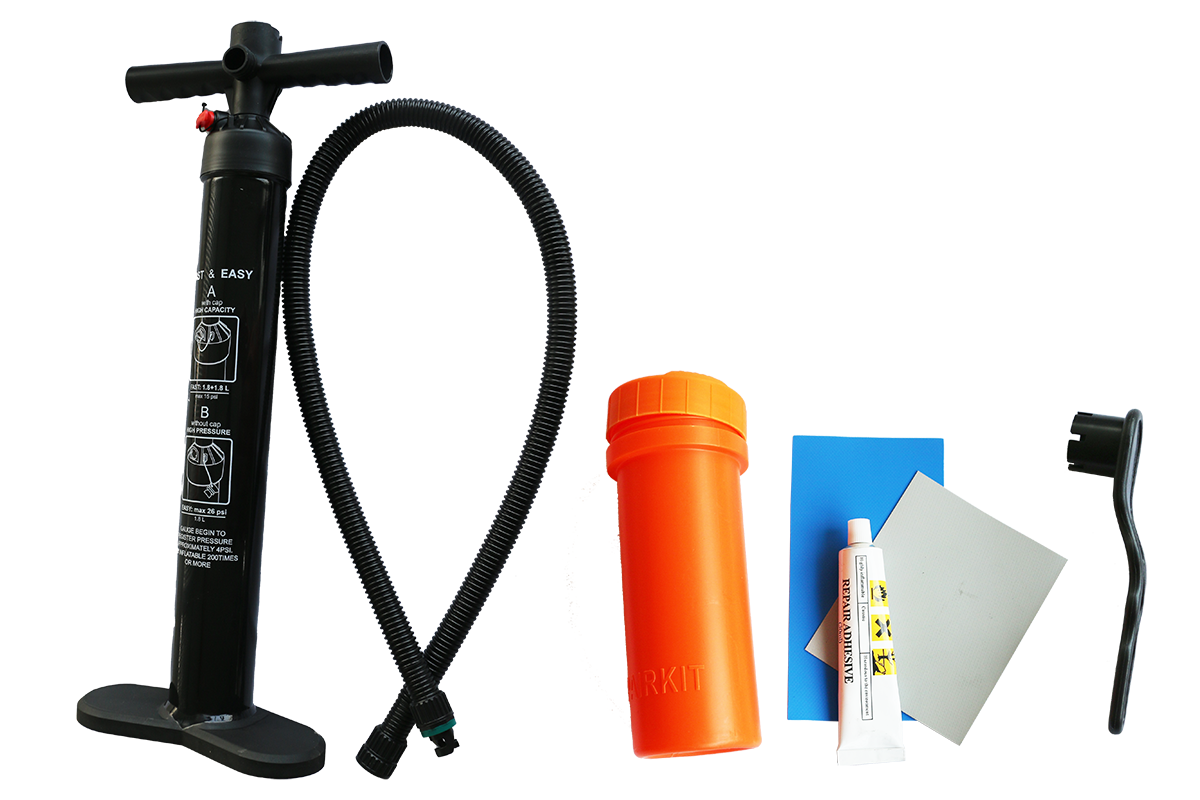
A platform’s commercial usefulness depends on the details around the main air chamber. Ask for a bill of materials covering marine-grade stainless steel D-rings, grab handles, connection points, valves, protective edges, and any ladder or mesh components. Hardware should match the water environment and the intended connection method.
A typical procurement review should clarify whether the package includes a manual double-action pump, repair kit, carry bag, ropes, straps, ladder, or other accessories. If the platform will be connected to a yacht, marina structure, or other floating modules, request a connection diagram and installation guidance. For a modular project, also confirm whether individual modules can be produced, transported, repaired, replaced, or reconfigured independently.
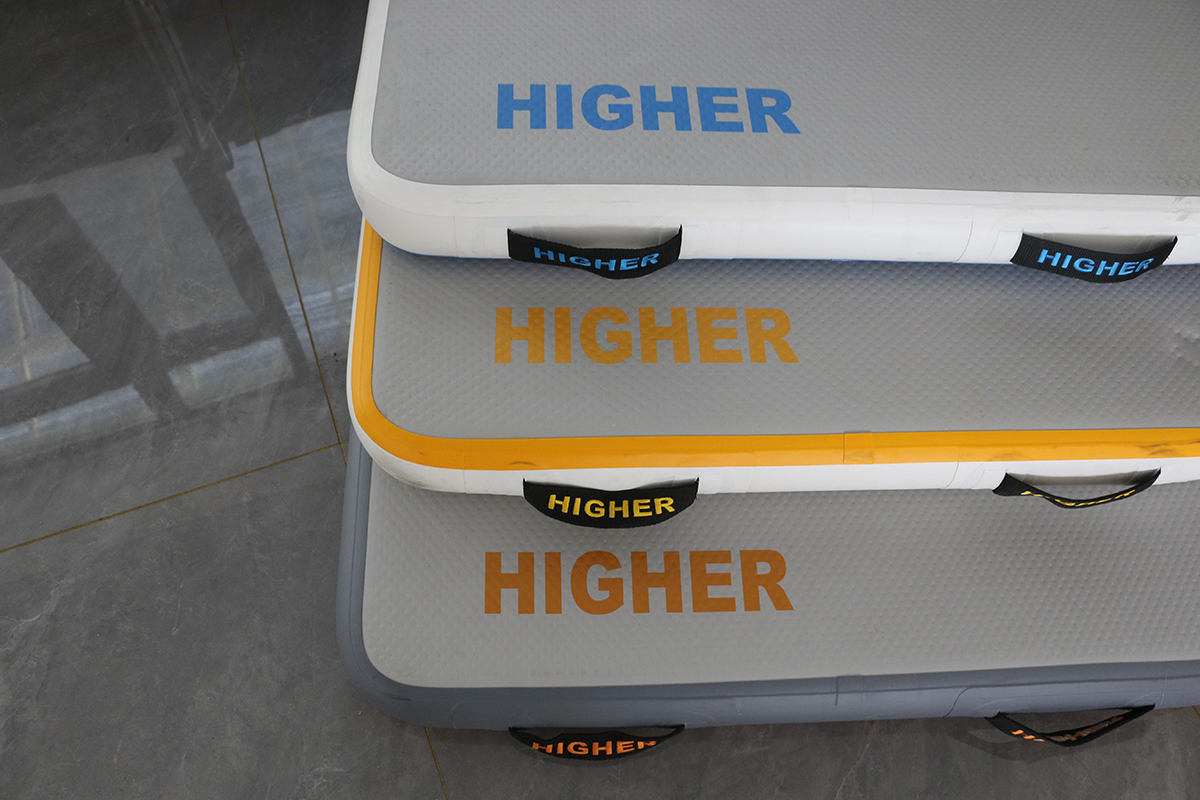
For a private-label product or a commercial project, an OEM/ODM supplier should contribute more than logo printing. Ask how the factory handles the process from concept brief to production sample and final shipment.
A useful OEM review includes:
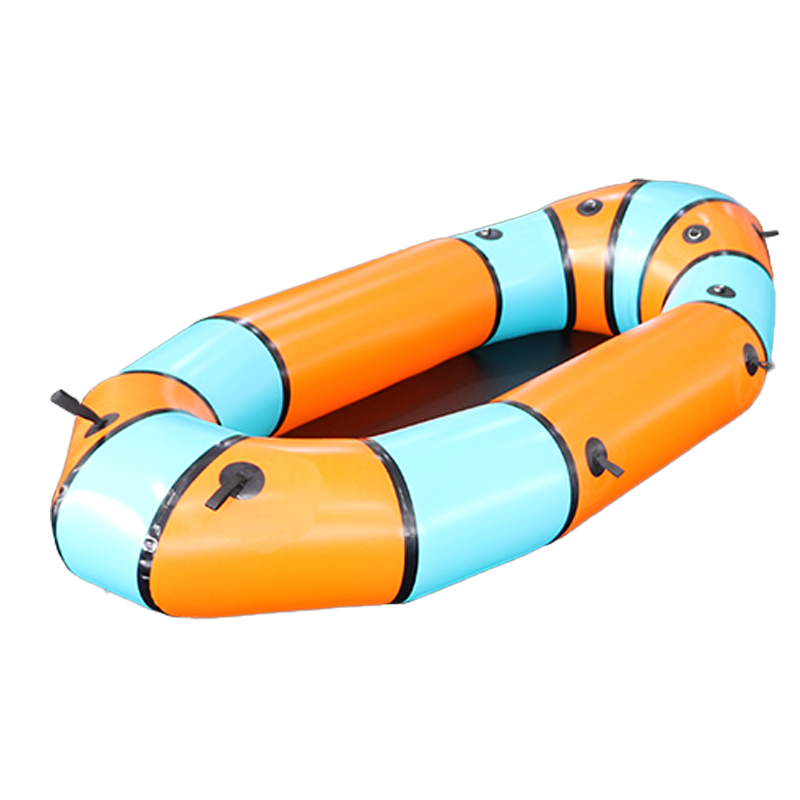
HIGHER states that it operates a production base in Laixi, Qingdao, Shandong, with a 12-person R&D team and a product range that includes inflatable water mats, inflatable floating docks, inflatable dry docks, inflatable sea pools, packrafts, and gym mats. Its public service information also describes customization of length, width, thickness, colors, and logo applications. These capabilities make the company relevant to distributors and brands looking for an inflatable water mat factory, inflatable platform manufacturer, or broader inflatable dock solutions partner. Project-specific feasibility, MOQ, lead time, and final specifications should still be confirmed in the quotation stage.
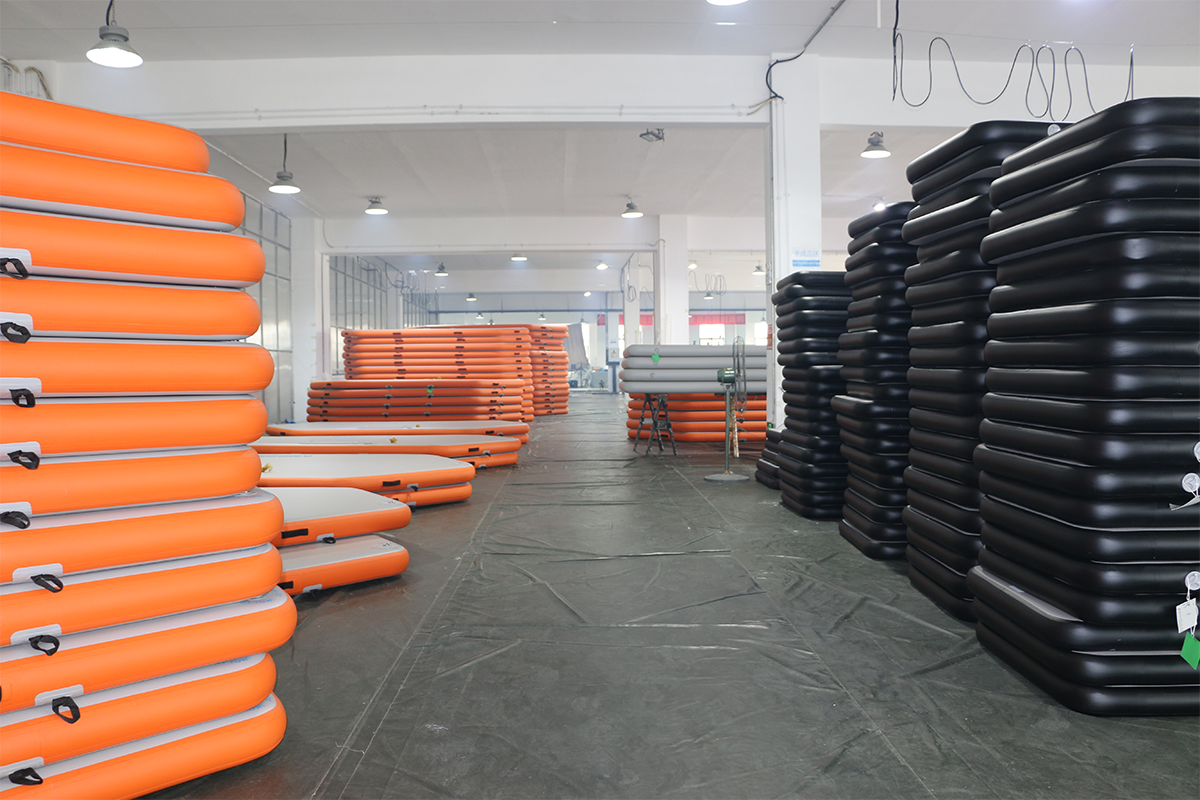
A professional manufacturer should explain how incoming materials, production steps, finished products, packaging, and documentation are checked. Ask for the inspection plan for the exact model, including seam inspection, air-retention or pressure-retention testing where applicable, accessory checks, and packaging verification.
Compliance should also be handled as a document review, not a marketing phrase. Confirm the destination market, product category, applicable standards, certificate scope, certificate holder, certificate number, and validity date. HIGHER’s About Us page states that its products are manufactured to CE, EN 15649, ASTM, and REACH requirements and that ISO 9001:2015 and SGS-related documentation is available for review. Buyers should request the relevant compliance pack for their selected product before final purchase-order approval.
For wholesale and seasonal businesses, supply reliability affects inventory planning, launch timing, and replenishment. Compare production capacity, raw-material planning, sample workflow, packaging capability, communication response, after-sales support, and shipping options—not only the quoted unit price.
HIGHER states that its China production base has approximately 120 staff and a monthly capacity of 3,000–5,000 units. The company also identifies a Monterey Park, California warehouse for North American local support. These are useful supply-chain factors for distributors and commercial buyers to review, but the quotation should confirm current capacity, available stock, order allocation, and the delivery plan for the specific project.
HIGHER, founded in 2013, positions itself as a factory-direct manufacturer and OEM/ODM partner for inflatable water-recreation products. Its product portfolio covers inflatable floating dock platforms, floating water mats, inflatable swim platforms, dry docks, sea pools, and related outdoor products. The company combines a Qingdao-area production base, an R&D team, quality-control processes, and California local support for eligible North American partners.
For a new wholesale program, yacht platform, marina inflatable platform, or commercial water-recreation project, HIGHER can review the intended application, target market, dimensions, material preferences, branding, accessories, and volume requirements before preparing a technical proposal.
The most important factor is whether the manufacturer can provide a traceable specification and production plan for your application, including material, construction, hardware, testing, customization, and delivery requirements.
Do not choose by thickness alone. The appropriate thickness depends on the intended users, load assumptions, walking requirements, storage limits, and design. Ask the manufacturer to confirm the suitable configuration for the project.
HIGHER publicly offers OEM/ODM services and customization of dimensions, thickness, color, and logo applications. Structural changes, accessories, MOQ, samples, and lead time should be confirmed in a project-specific quotation.
Request a technical drawing or specification, bill of materials, sample plan, inspection requirements, compliance documents, packaging details, production schedule, warranty terms, and after-sales process.
Share your application, target market, preferred dimensions, estimated quantity, branding requirements, accessories, and delivery destination with HIGHER. The team can then assess the project and recommend an inflatable floating dock, inflatable water mat, inflatable swim platform, or custom modular solution aligned with your commercial requirements.

 EN


 Hot News