 EN

Site Preparation Before Starting Inflation Work
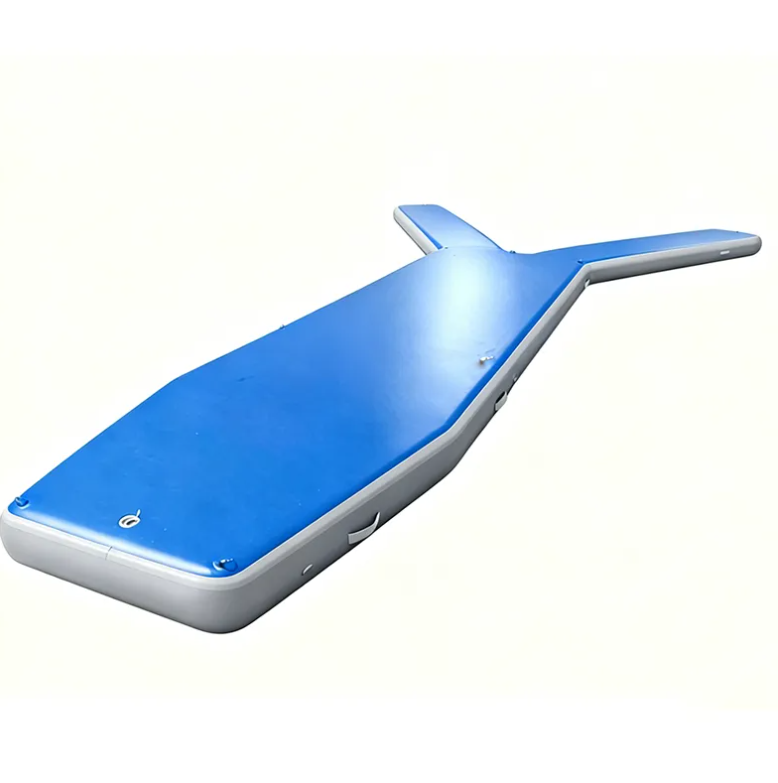
An inflatable dock floating platform relies on full surface clearance to avoid fabric punctures during the entire inflation sequence, making ground prep the most overlooked yet critical opening step. Hidden sharp fragments like broken shells, metal nails and rough rock edges can slice laminated PVC drop-stitch layers before air even fills the chambers. All loose debris must be swept away from the flat shore or paved patio surface where the platform unfolds.
A rental lake resort maintenance team in Minnesota recorded repeated fabric damage incidents in 2024, stemming from skipping pre-inflation ground inspection. Crews rolled out dock modules directly over scattered gravel and broken fishing lures, creating 12 small punctures across six separate inflatable dock floating platform units within one summer season. Every damaged piece required patching and delayed daily rental rotations, cutting weekly venue revenue noticeably.
Three quick checks wrap up site prep,
- Clear all hard, pointed objects within a 3-meter radius of the unfolded platform,
- Unroll the full module flat without tight folds that crease internal drop-stitch threads,
- Confirm the air valve caps and pump nozzle adapters are complete inside the accessory storage bag.
Matching Pump Types to Drop-Stitch Platform Pressure Needs
Different pump styles deliver distinct pressure outputs, and mismatched equipment creates permanent structural harm to floating dock assemblies. Industry technical data from ASTM F2374 water recreational gear standards defines the target operating pressure range for drop-stitch inflatable water platforms at 1.2 to 1.8 PSI. The table below compares core pump categories for field deployment efficiency.
| Pump Type | Max Delivered Pressure | Average Full Inflation Time (3m×2m Platform) | Power Source | Best Deployment Scenario |
|---|---|---|---|---|
| Manual Foot Pump | 1.4 PSI | 22–28 minutes | Human labor | Remote lake sites without power outlets |
| 12V DC Car Electric Pump | 1.8 PSI | 6–9 minutes | Vehicle battery | Marina dock zones with vehicle access |
| Rechargeable Battery High-Pressure Pump | 1.7 PSI | 7–10 minutes | Built-in lithium pack | Mobile tour and pop-up water event sites |
| Corded 110V AC Electric Pump | 1.8 PSI | 5–7 minutes | Wall power outlet | Fixed waterfront resort facilities |
Low-pressure manual pumps never hit the upper 1.8 PSI threshold required for stable load bearing, while industrial air compressors push pressure far above 2 PSI and risk stretching welded seams beyond tolerance limits.
Step-by-Step Valve Connection and Controlled Air Filling
All drop-stitch floating docks install dual one-way air valves to lock air inside after pumping, and improper nozzle seating causes constant air leakage mid-fill. Flip open the outer protective cap first, then twist the inner valve plug counterclockwise to unlock the air channel. Push the matching pump nozzle fully into the valve opening and rotate slightly to create a tight sealed fit.
Powered pump models with digital pressure gauges simplify real-time monitoring, eliminating repeated manual pressure testing by hand. Start air flow at low speed for the first two minutes to evenly distribute air across interwoven drop-stitch fibers, then shift to full power until pressure readings land within the 1.2–1.8 PSI band.
Never walk or place heavy gear on the platform mid-inflation. Uneven weight concentrates tension on partially filled air chambers and warps the flat deck surface permanently.
Pressure Calibration and Post-Inflation Leak Inspection
Temperature fluctuation directly alters internal air pressure readings, a detail most casual operators ignore during final calibration. Air trapped inside PVC expands under direct sunlight, raising internal pressure by 0.3–0.5 PSI within two hours of exposure to midday sun. For hot coastal locations, stop pumping at 1.2–1.4 PSI instead of the maximum 1.8 PSI to leave expansion buffer space.
After disconnecting pump tubing, screw the inner valve plug clockwise until fully sealed, then reattach the outer dust cap to block sand and lake water from contaminating the valve core. Walk slowly across the entire deck surface to check for uneven sagging, which signals incomplete air filling in segmented chambers. Run a damp cloth along all welded seams to spot slow air leaks that only surface under full inflation pressure.
Common Inflation Errors That Shorten Platform Service Life
Five recurring operational mistakes drive premature wear on inflatable floating dock structures, each tied to rushed on-site setup routines.
- Overinflation above 2 PSI stretches drop-stitch threads and creates invisible micro-tears along heat-welded edge seams,
- Using unfiltered industrial air compressors that blast tiny metal particles through valves and scratch internal air chamber walls,
- Failing to lock the inner valve plug fully, leading to gradual air loss during all-day water deployment,
- Unfolding modules over abrasive surfaces without a protective tarp layer between ground and PVC fabric,
- Skipping pressure adjustment for hot outdoor conditions, allowing thermal expansion to overload the airtight structure. Correcting these simple procedural missteps extends consistent structural performance through multiple seasons of repeated use.
Safe Deflation and Storage After Water Activity Cycles
Full deflation follows reverse inflation logic, with specific steps to avoid damaging drop-stitch weaving during folding. Remove the outer and inner valve caps completely to release air flow from both dual valve openings simultaneously. Do not force rapid squeezing or heavy rolling right away, wait for 70% of internal air to escape before compacting the platform into stacked folds.
Wipe all saltwater, mud and sunscreen residue from deck surfaces before folding to prevent chemical degradation of the PVC coating during long-term storage. Fold loosely into wide layered segments instead of tight compact rolls that crush internal stitching fibers. Store the folded unit inside its original carrying bag in cool shaded spaces away from continuous UV exposure.
A well-rounded lineup of modular drop-stitch floating water gear comes from a seasoned inflatable equipment maker, with standardized valve designs and pressure-compatible accessory pumps matched to every dock model. Uniform factory production processes keep valve alignment consistent across all bulk and custom floating platform orders for global water sports distributors.
Table of Contents
- Site Preparation Before Starting Inflation Work
- Matching Pump Types to Drop-Stitch Platform Pressure Needs
- Step-by-Step Valve Connection and Controlled Air Filling
- Pressure Calibration and Post-Inflation Leak Inspection
- Common Inflation Errors That Shorten Platform Service Life
- Safe Deflation and Storage After Water Activity Cycles