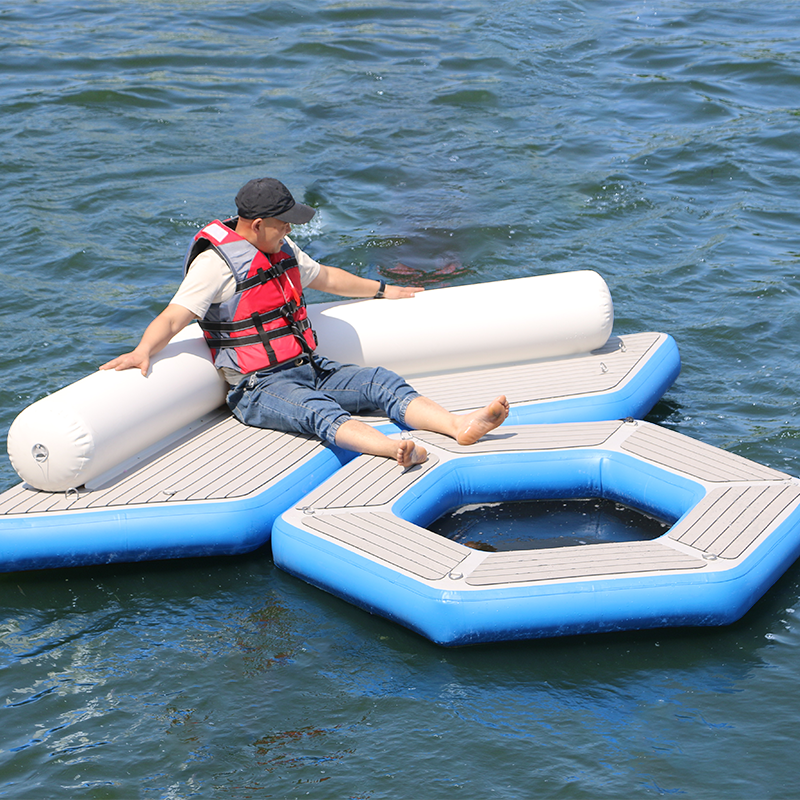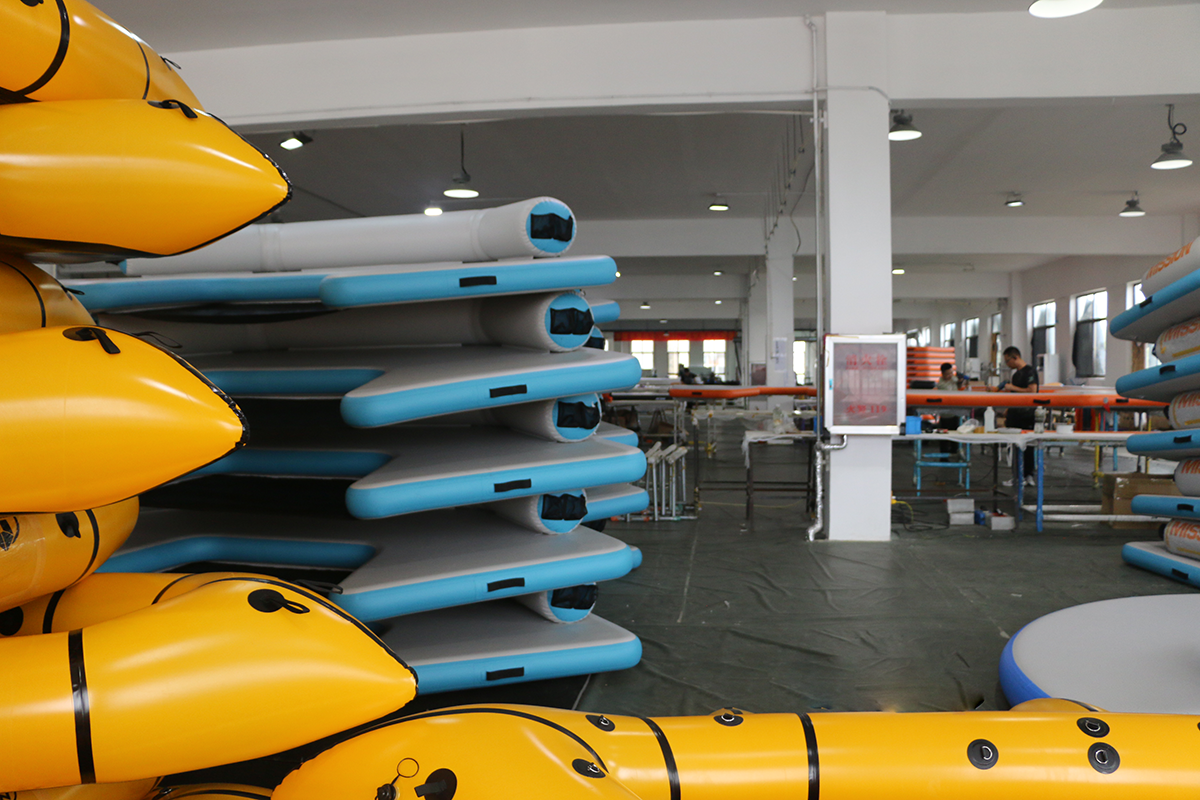
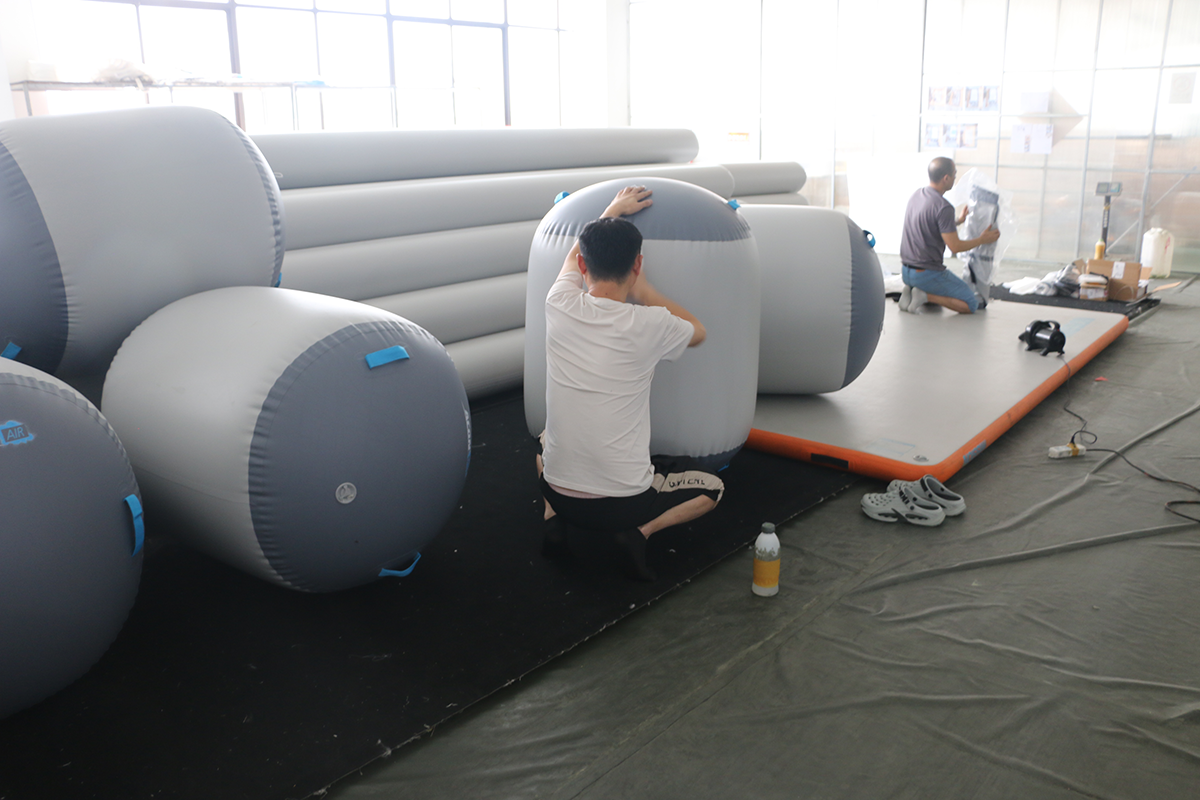
A photo of an inflatable dock platform workshop is useful conversation starter, not a production certificate. It can show how a work area is organized; only drawings, material records, inspection sheets, and an approved order can establish what will actually be made for a buyer.
A credible wide shot should make workstations and material flow understandable. Ask what is being cut, assembled, bonded, inspected, and packed, and whether the stations belong to the same product family. A panoramic image can't show how many finished units are available, which construction method a specific model uses, or whether the pictured workers produced a particular shipment. HIGHER's About Us page describes its production base and team; those are company-published statements, not measurements inferred from a photo.
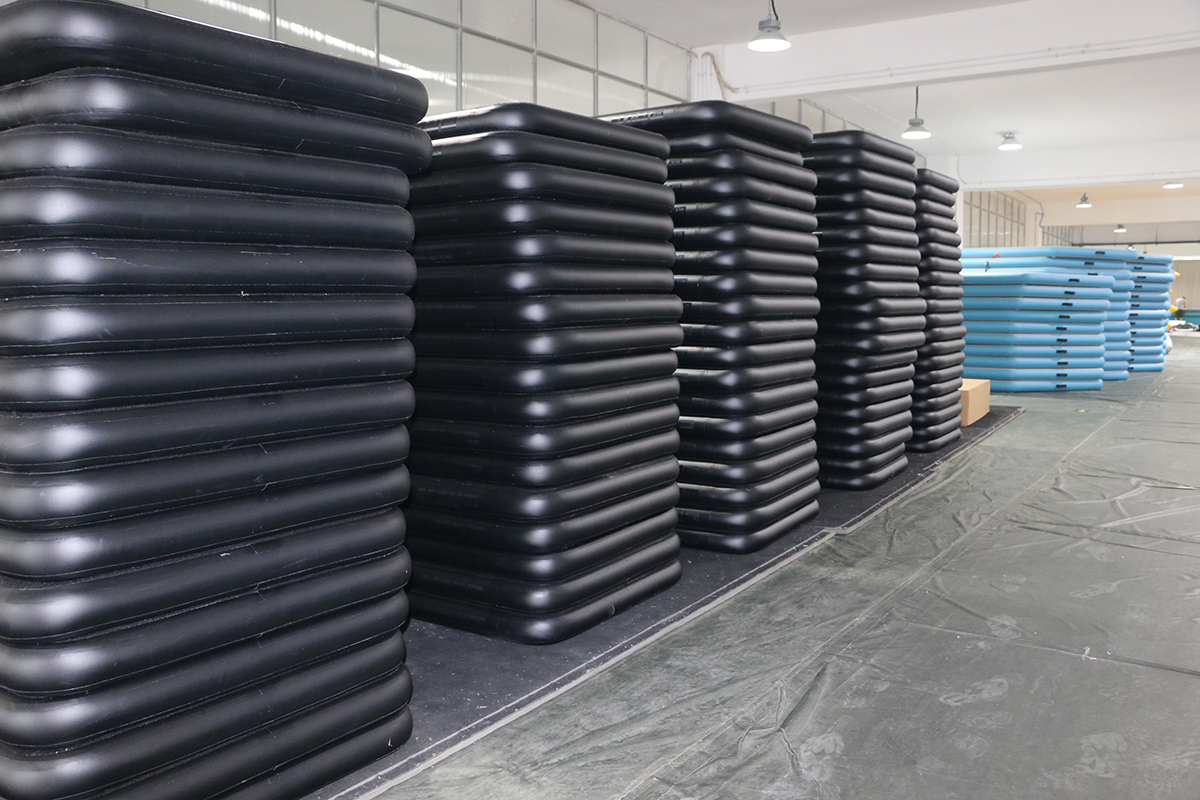
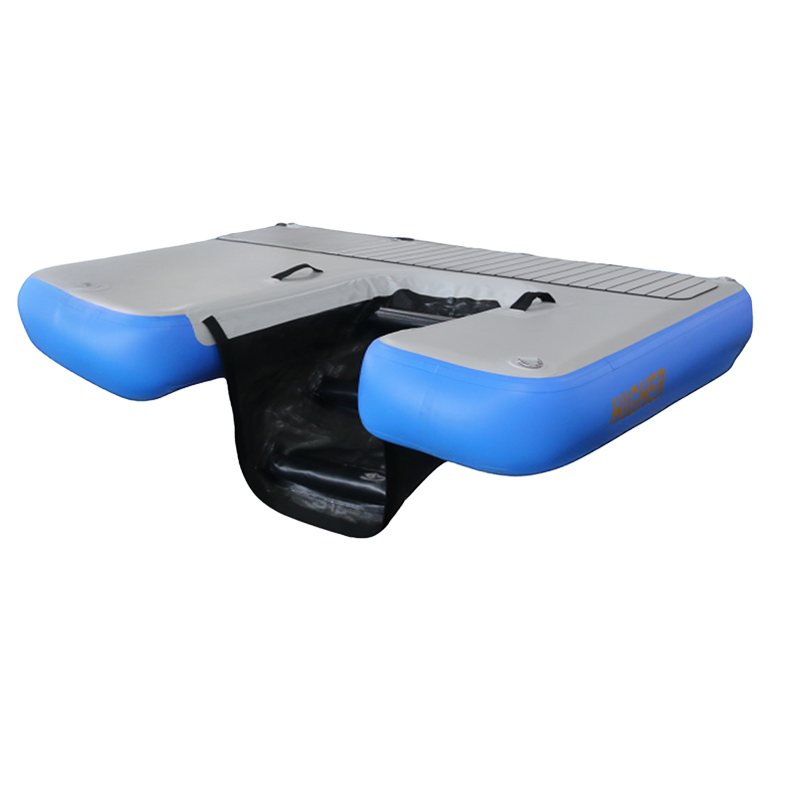
For the intended inflatable floating dock, request an approved drawing, material specification, component list, and sample sign-off. A practical walkthrough starts with incoming material identification, continues through panel preparation and joins, and ends at inspection and packaging. Ask the production contact to explain which steps are in-house for that SKU and where any subcontracted components enter the process. Comparing the explanation with the work order is much more informative than counting items in a staged frame.
Record the precise model, dimensions, deck finish, connection hardware, and destination market before requesting process evidence. If the configuration changes after sampling, ask for a revision record showing what changed and which checks must be repeated. A workshop tour is especially valuable when a brand is comparing standard shapes with project-specific layouts: it can reveal where approvals and handoffs happen, without pretending a photo proves readiness.
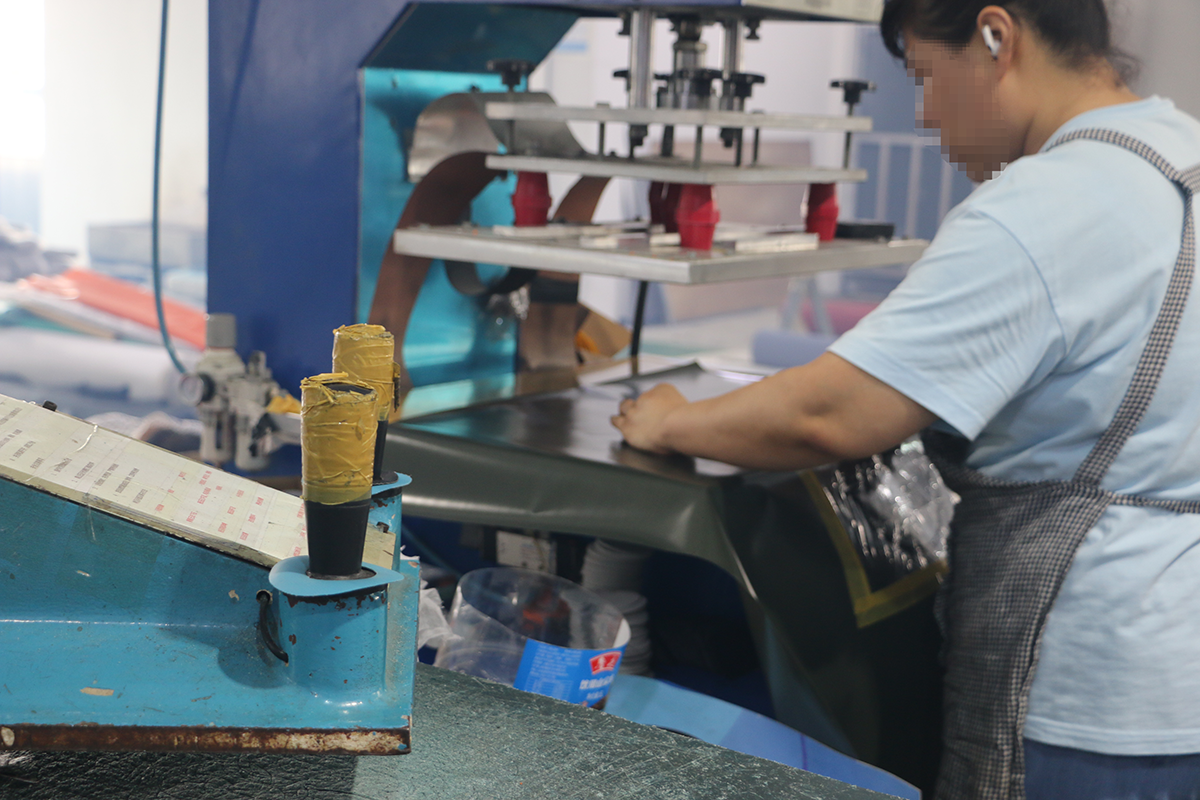
A useful deliverable from the visit is a short evidence register: document name, model, revision, owner, and approval status. It gives purchasing and engineering a shared language when they revisit the quote weeks later. Hold back captions such as “today's production run” unless the date, work order, and publication rights have been confirmed.
Ask the host to identify one representative model and explain which records would accompany it from sample approval to finished inspection. Keep commercially sensitive details private, but record the document types and responsible departments. If a photograph is later chosen for publication, verify it shows the same process the article describes; otherwise use a neutral caption that states only what is visible. This turns a memorable factory visit into a buyer decision rather than a collection of unconnected images.
Send HIGHER your dock application, target dimensions, connection plan, expected volume, and destination to request a model-specific technical proposal.
 EN

 Hot News