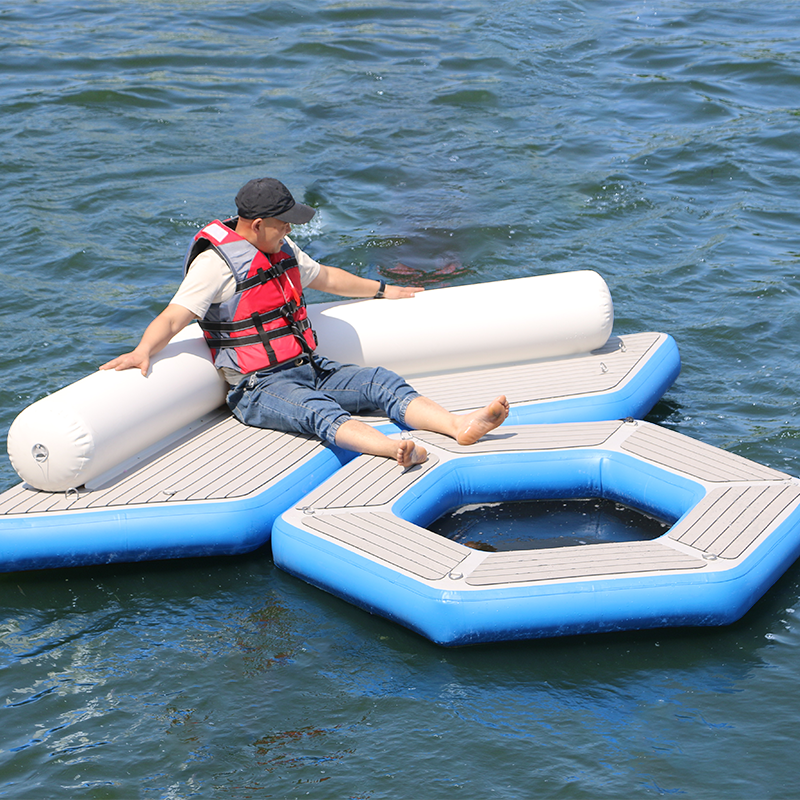
Introduction: Define the Application First, Then Choose the Product.
When sourcing an inflatable floating dock, the first priority should not be color or unit price, but the intended application. Will the product be used for boat boarding, yacht marinas, lake recreation, resort water activities, rental operations, or expandable modular floating spaces? Different applications have different requirements for connections, anchoring, edge protection, surface finishes, slip resistance, accessories, packaging, and replenishment schedules.
1. Distinguish Between a Floating Dock for Boats and a Water Recreation Platform
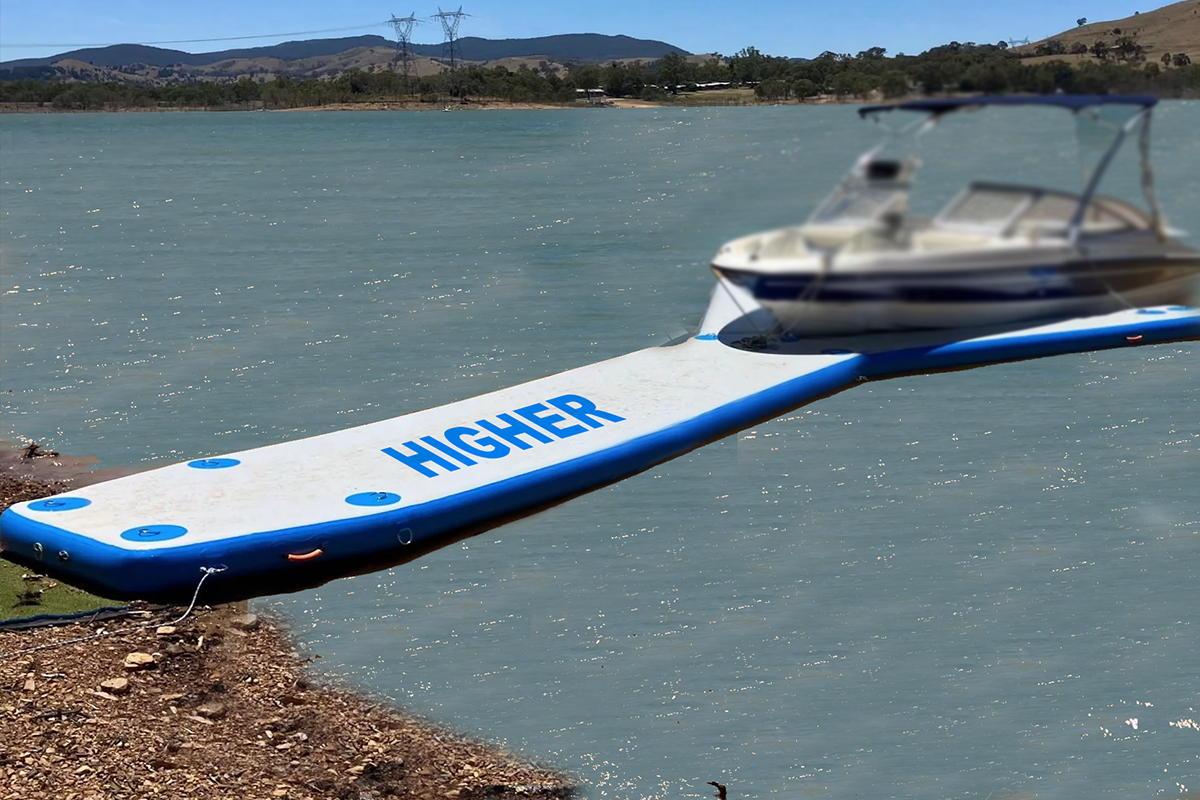
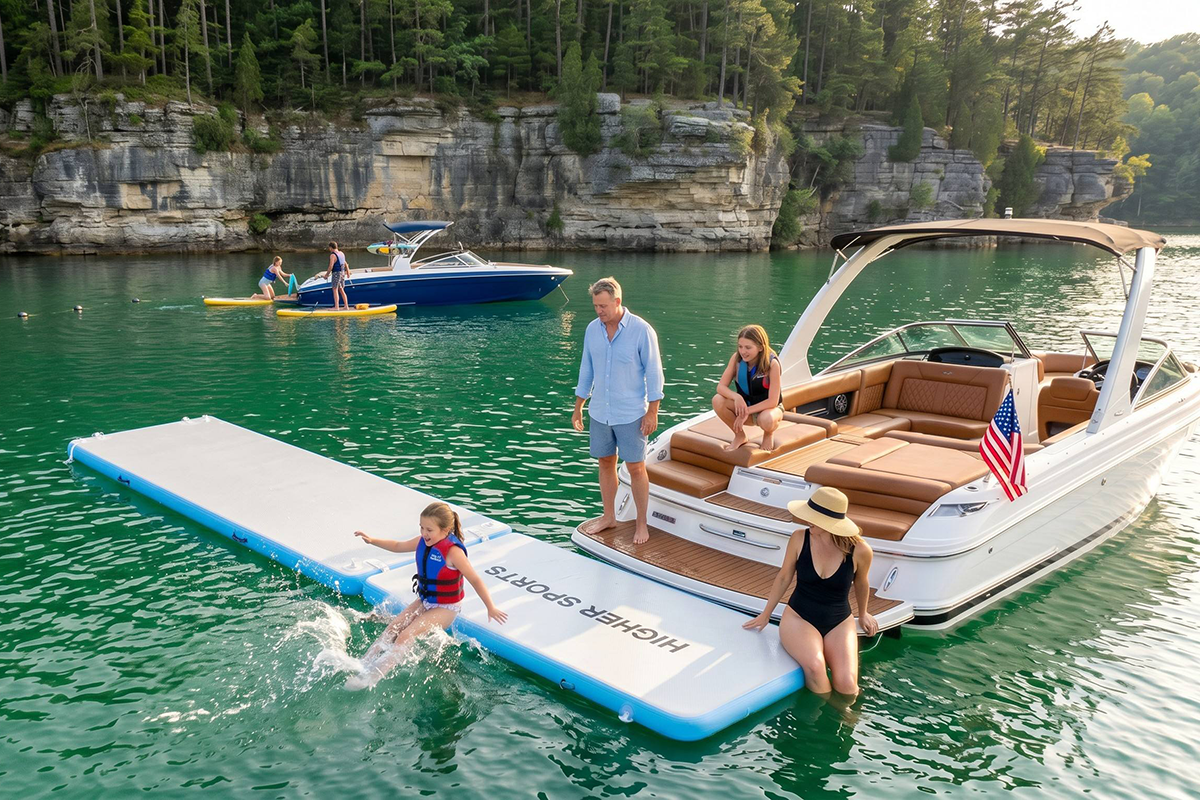
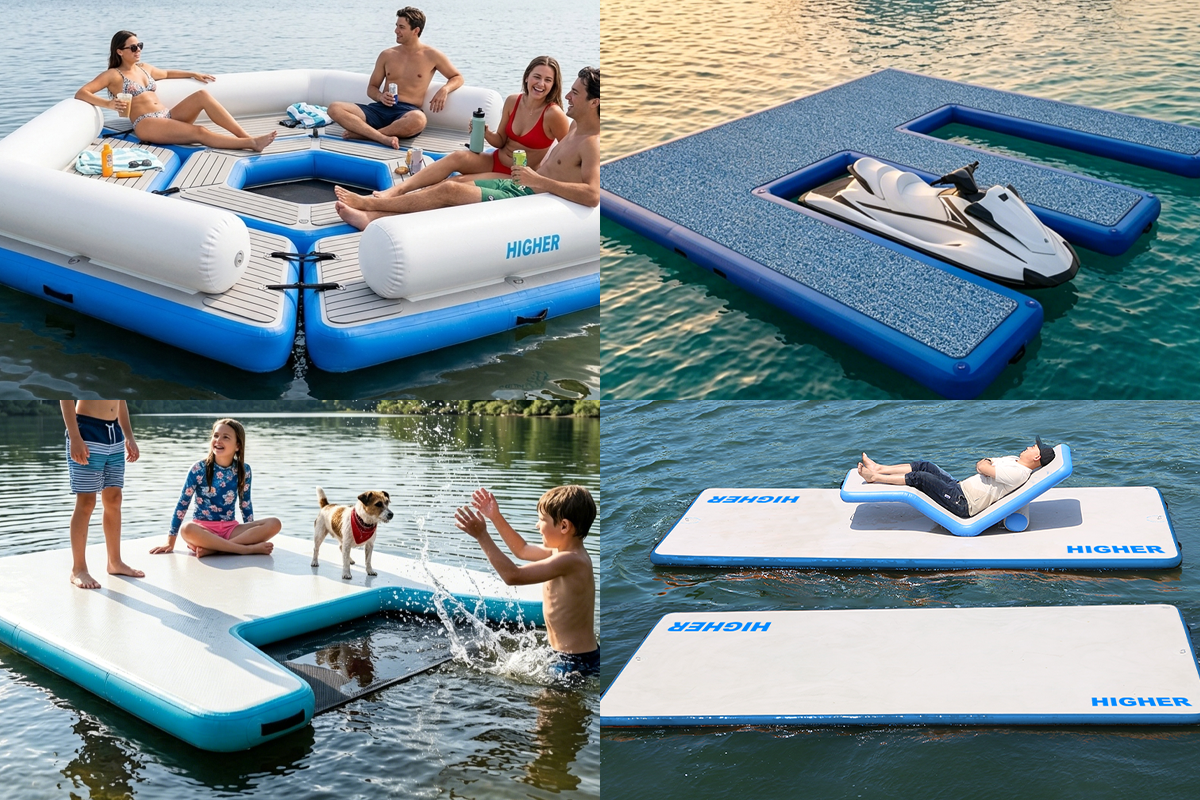
If the product is primarily intended for floating docks for boats or floating boat docks, buyers should prioritize the boat-contact areas, connection points, anchoring solutions, edge protection, and long-term deployment requirements. For water recreation applications, buyers should further determine whether they need an inflatable swim platform, floating water mat, floating platform, or an aqua mat designed more for relaxing and lounging. Similar product names do not necessarily mean the same applications or configurations.
2. Ask About Structure and Materials
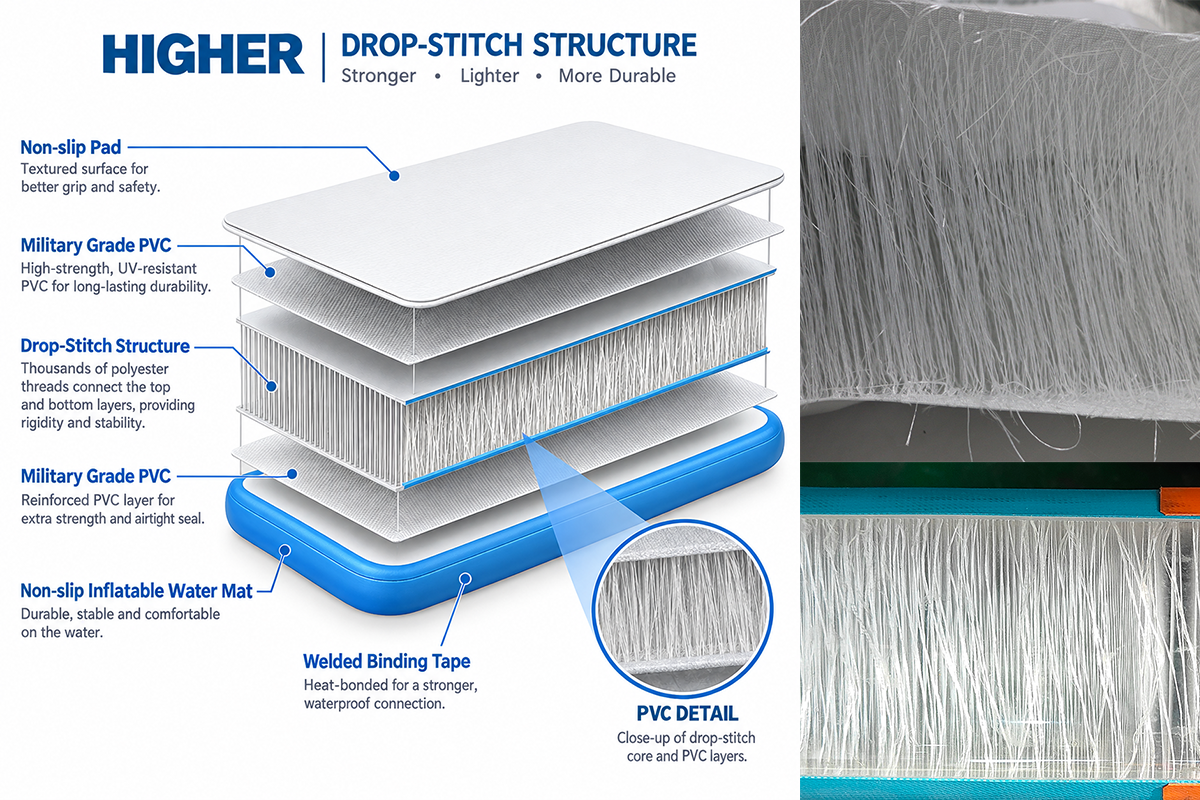
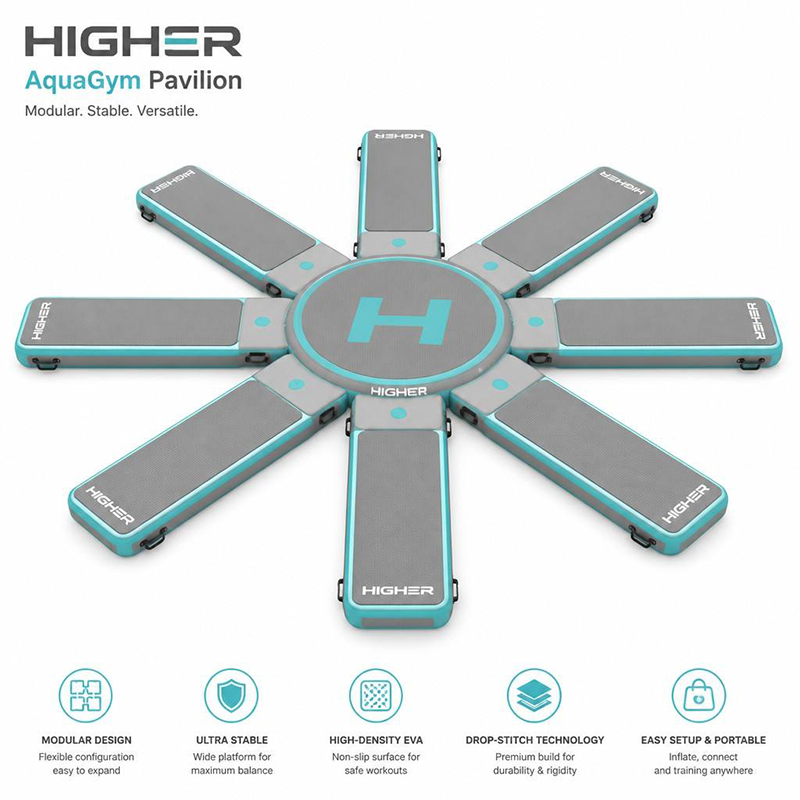
Drop-stitch construction is one of the common structural solutions used in high-pressure inflatable products. Buyers should ask suppliers to specify the fabric construction, PVC or TPU material, material thickness, air chamber design, operating pressure, connection methods, and accessory configurations.
For PVC products, buyers should also ask directly how the seams are made. HIGHER describes its relevant manufacturing process as Manual Positioned Gluing & Heat Sealing Process. The actual steps include manual positioning and adhesive application, manual heating with a heat gun, and manual pressing with a scraper.
3. Evaluate Quality Control (QC)
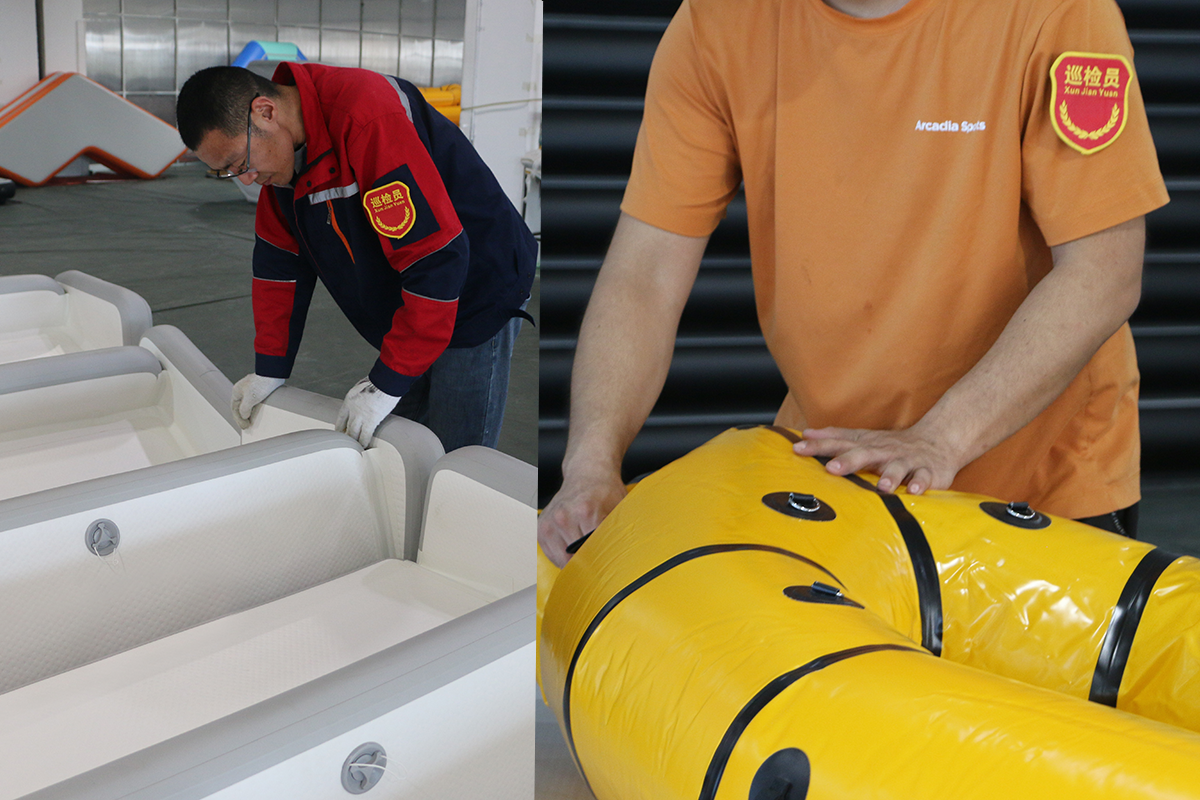
The term “commercial-grade” should be supported by actual quality control procedures rather than used as a marketing adjective alone. Buyers should ask about incoming material inspections, seam inspections, accessory attachment checks, finished-product testing, and packaging inspections.
For applicable product lines, HIGHER conducts pressure-retention testing for 24 hours on semi-finished products and 48 hours on finished products. HIGHER also has a dedicated quality inspection team that conducts ongoing, unscheduled product quality checks.
4. Evaluate OEM and Delivery Capabilities
For brands and distributors, an OEM brief should include at least the intended application, target market, dimensions, materials, colors, logo requirements, accessories, packaging, labeling, documentation, and estimated order quantity.
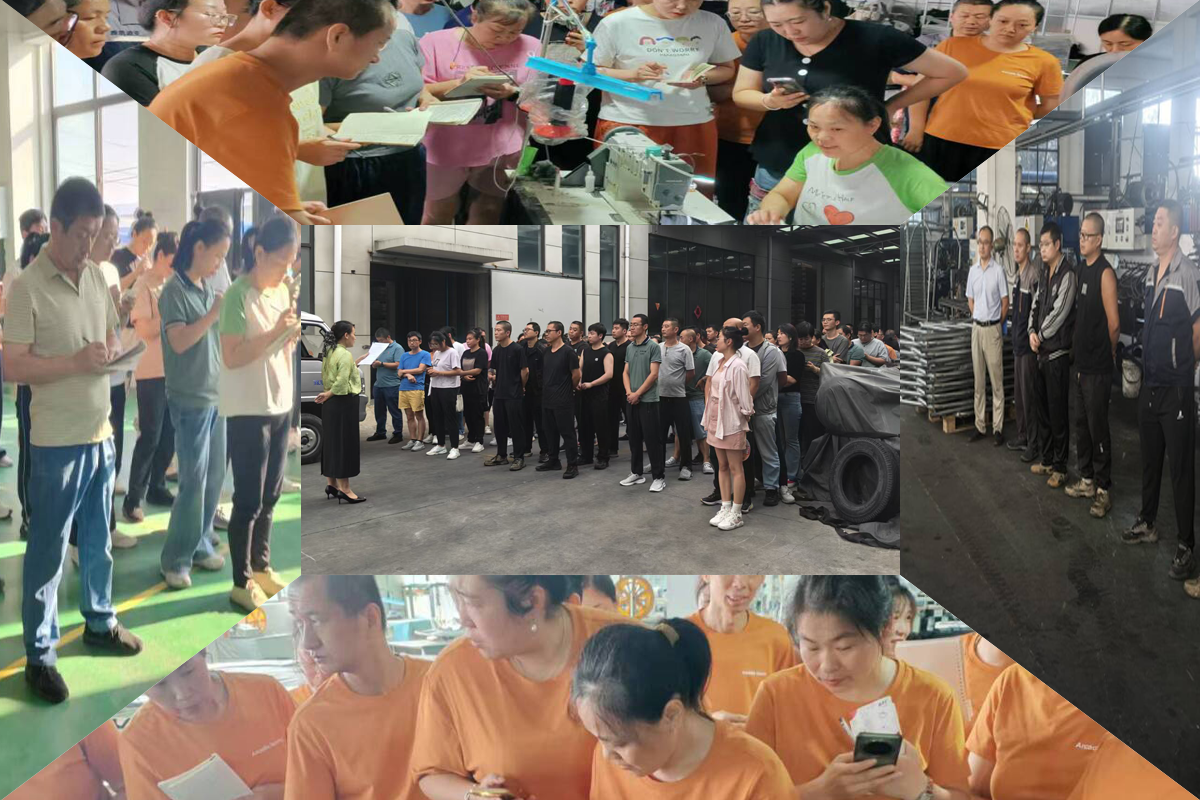
HIGHER has a manufacturing base in Qingdao, a 12-member R&D team, and warehousing support in California, USA. These capabilities support discussions about customization and supply solutions for inflatable dock platforms, floating water mats, and other inflatable water products.
Specific lead times, container loading quantities, and compliance documentation should be confirmed according to the product model and order requirements.
Conclusion
Choosing an inflatable floating dock should involve more than comparing product images and quotations. Buyers should build a comparison checklist covering six key areas: application, structure, manual manufacturing processes, QC, OEM scope, and delivery requirements, then request a technical proposal from shortlisted suppliers.
This approach helps reduce the risks of selecting the wrong product, repeatedly revising specifications, and facing uncertainty when replenishing inventory during peak season.

 EN


 Hot News